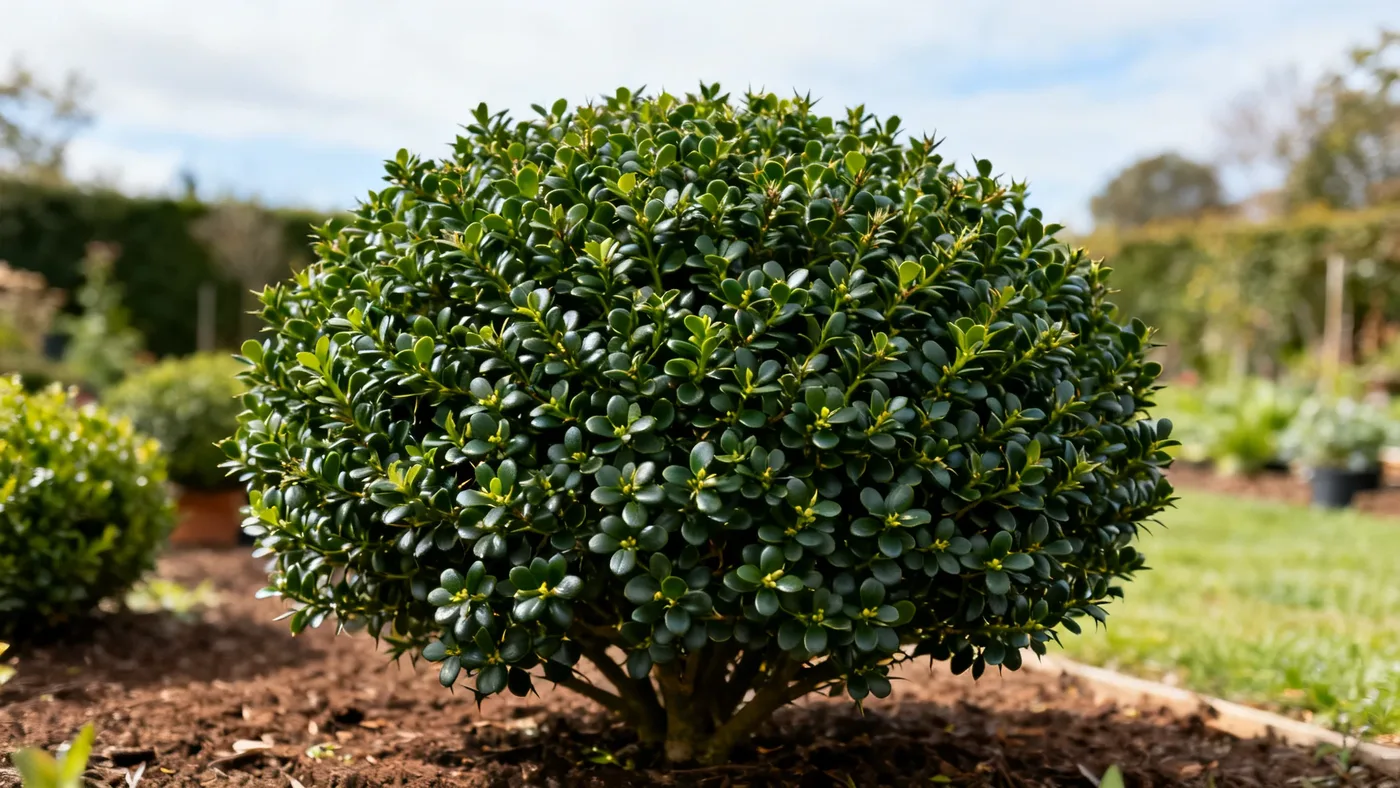
Does Soft Touch Japanese Holly Do Well in Shade?
The short answer: Soft Touch Japanese Holly tolerates part shade well and actually performs best in partial light, especially in hotter climates. But full shade will thin its foliage and slow an already modest growth rate. For the best results, you need to understand the light conditions in your garden and choose the right microspot for this shrub.
Unlike many broadleaf evergreens, Soft Touch Japanese Holly is not a sun-worshipping plant. It actually performs best in full sun to part shade, with best foliage density in part shade, especially in hot climates. But "part shade" and "full shade" are two different things, and the plant behaves very differently depending on which you can provide. This guide walks you through assessing your shade situation, preparing the right planting spot, and caring for Soft Touch Japanese Holly once it is established in lower light.
Understanding Light for Soft Touch Japanese Holly
Before you plant, measure the light your garden actually gets. Soft Touch Japanese Holly performs best in full sun to part shade conditions. "Full sun" means 6 or more hours of direct sunlight daily. "Part shade" means 3 to 6 hours of direct sun, or dappled light throughout the day. "Full shade" means less than 3 hours of direct sun.
The plant will survive in more light variation than you might expect from an evergreen shrub. In hot climates (zone 8), part shade actually delivers better foliage density than full sun, because the partial shade protects the plant from heat stress and reduces water demand. But in cooler zones (5 through 7), the plant tolerates more sun without stress and performs adequately in full sun as well.
Full shade is the threshold where this plant starts to struggle noticeably. In full shade, expect slower growth, thinner foliage, and a less dense mounded form. Growth already proceeds at roughly 3 to 6 inches per year under ideal conditions. In shade, expect the lower end of that range or slower. The plant will not thrive in full shade, though it may survive for several years before decline becomes obvious.
Step 1: Assess Your Shade Type and Duration
Walk your planting site at three times of day: morning (8 to 10 a.m.), midday (noon to 2 p.m.), and afternoon (3 to 5 p.m.). Note where direct sun lands and for how long. Pay special attention in both summer, when the sun arc is highest, and in winter, when it is lowest. A spot that gets 4 hours of dappled morning sun and afternoon shade in summer might receive more direct afternoon sun in winter once trees lose their leaves.
If you live in zone 8 or a region with hot summers, afternoon shade becomes more valuable than morning sun. If you are in zones 5 to 7, the plant is more flexible about light timing, though it still performs best in part shade rather than full shade.
Record your findings on paper or a phone note. Mark which hours receive direct sun, which receive dappled or filtered light, and which are fully shaded. Repeat this observation over a few days if the weather varies. This takes 30 to 45 minutes total but saves regret after you have planted.
Step 2: Test the Drainage
Shade and soil moisture go hand in hand. Shaded soil stays wetter longer because less sunlight means slower evaporation. Soft Touch Japanese Holly needs moist, well-drained, humus-rich soil. It tolerates clay if drainage is adequate, but it will rot if standing water collects around the roots.
Dig a 12-inch test hole at your chosen planting spot. Fill it completely with water and let it drain. After 24 hours, fill it again. If water drains away within 4 to 8 hours both times, your drainage is good enough. If water still pools after 24 hours, you need to either improve the soil or choose a different location.
If drainage is slow, you can amend the soil by mixing aged bark, compost, or peat moss into the excavated soil before backfilling. This improves porosity and prevents waterlogging in shade. Test your soil pH while you are at it. Soft Touch Japanese Holly prefers acidic to slightly acidic soil, roughly 5.0 to 6.5 pH. If you are unsure of your pH, a soil test from your local extension service takes guesswork out of the equation.
Step 3: Prepare the Planting Hole
Dig a hole as wide as the root ball and slightly shallower than its height. Nursery-grown plants are typically sold in quart, number 1, or number 3 containers. Match your hole size to the container you are planting.
Mix the excavated soil with 1 part aged bark, compost, or peat moss by volume. This improves soil structure and helps the soil retain moisture without becoming waterlogged. In shade, evaporation is slower, so proper drainage matters even more.
Set the shrub in the hole so the top of the root ball sits at or slightly above grade. Setting it too deep is a common mistake that leads to stem rot. Backfill halfway with amended soil and water deeply. This settles the soil and removes air pockets. Finish backfilling with the remaining soil, then water again. Firm the soil with your hands so there are no large air pockets, but do not compress so hard that roots cannot penetrate.
Spread a 2-inch layer of mulch around the base, keeping it 2 to 3 inches away from the stem itself. Mulch conserves soil moisture, keeps roots cooler, and suppresses competing weeds. In shade, where moisture naturally lingers, make sure mulch does not trap water against the stem, which invites rot.
Step 4: Water Consistently During Establishment
Soft Touch Japanese Holly is not drought tolerant once established compared to true drought-tough shrubs. In shade, where it will take longer to establish, consistent moisture is even more critical.
Water deeply once or twice per week during the first spring and summer growing season, depending on rainfall. Check the soil 2 inches below the surface before watering. If it feels dry to the touch, water thoroughly. If it feels moist, wait another day or two. Water less often in fall and winter, when growth slows and evaporation drops further.
In subsequent years, supplement with water during dry spells lasting more than 2 weeks without rain. Shade reduces evaporation, so you may need less supplemental water than plants in full sun, but monitor soil moisture rather than watering on a fixed schedule.
Step 5: Prune Lightly to Maintain Shape
Soft Touch Japanese Holly naturally grows into a mounded form and requires minimal pruning to maintain its shape. Light shearing in late winter or early spring before new growth encourages a denser form. You can also prune lightly after the main flush of growth in early summer if needed.
In shade, resist the urge to shear heavily in hopes of making the plant denser. Heavy pruning removes leaf surface area the plant needs to manufacture food in lower light conditions. Keep pruning light and infrequent, focusing on removing dead wood and shaping only when necessary.
Common Mistakes in Shade Situations
Planting too deep: The top of the root ball should sit at or slightly above grade, not buried below the soil surface. Plants set too deep, especially in shade where soil moisture is already higher, rot at the stem base within the first year or two.
Overwatering: Shade means slower evaporation. You need less water than you might think. Overwatering is the leading cause of root rot in shaded settings. Check before you water, rather than watering on a fixed schedule.
Expecting full-sun density in full shade: Soft Touch Japanese Holly tolerates part shade, not full shade. If your site receives fewer than 3 hours of direct sun daily, prepare for visibly slower growth and a thinner, less mounded form. The plant may not reach its typical mature size of 2 to 3 feet tall and 3 to 4 feet wide within the normal timeframe of 3 to 5 years. In true full shade, this plant may not be the right choice for that location.
Skipping the drainage check: Shade, clay soil, and poor drainage together create root rot quickly. Test drainage before you plant, and amend soil if needed. This single step prevents most problems.
Heavy mulching around the stem: A 2-inch mulch layer is beneficial. A 6-inch mulch mountain pressed against the stem is not. Mulch that touches the bark traps moisture and invites rot, especially in shade.
Expected Results
In part shade (3 to 6 hours of sun or dappled light throughout the day), expect a dense, mounded plant that reaches its mature size of 2 to 3 feet tall and 3 to 4 feet wide over roughly 3 to 5 years. Foliage will be dark green and fine-textured. The plant will maintain its compact mounded form through winter, providing year-round structure in the landscape.
In full shade, growth will be noticeably slower, foliage will appear thinner and less uniformly dense, and the characteristic mounded form will be less pronounced. The plant may not reach the same mature size within the typical timeframe. While it will not die immediately, it will not thrive, and you may notice decline after a few years.
In zones 5 to 7, the plant is hardy and winter damage is unlikely regardless of shade level. In zone 8, where heat and humidity are factors, part shade actually improves overall performance compared to full sun. The best scenario is a location with morning sun and afternoon shade in zone 8, or morning and midday sun in zones 5 to 7.
Quick Reference: Shade Planting Checklist
| Task | Timing | Details |
|---|---|---|
| Assess light duration | Before planting | Record direct sun hours in morning, midday, and afternoon; note seasonal variation |
| Test drainage | Before planting | Dig 12-inch test hole; water should drain in 4-8 hours on two successive fills |
| Check soil pH | Before planting | Target 5.0-6.5 (acidic to slightly acidic); use extension soil test if unsure |
| Prepare soil | Planting day | Mix excavated soil 1:1 with aged bark, compost, or peat moss |
| Dig planting hole | Planting day | Width equals root ball width; depth slightly less than root ball height |
| Apply mulch | Planting day | 2-inch layer, 2-3 inches away from stem; do not mound against bark |
| Water weekly | First growing season (spring-summer) | Once or twice weekly; check 2 inches down before watering |
| Prune lightly | Late winter/early spring or early summer | Light shearing only; avoid heavy cuts in shade settings |
| Planting window | Any time | Spring or fall, avoiding peak summer heat and hard winter freezes |
For more on caring for Soft Touch Japanese Holly year-round, including fertilizing, pruning schedules, and pest management, see the complete care guide.