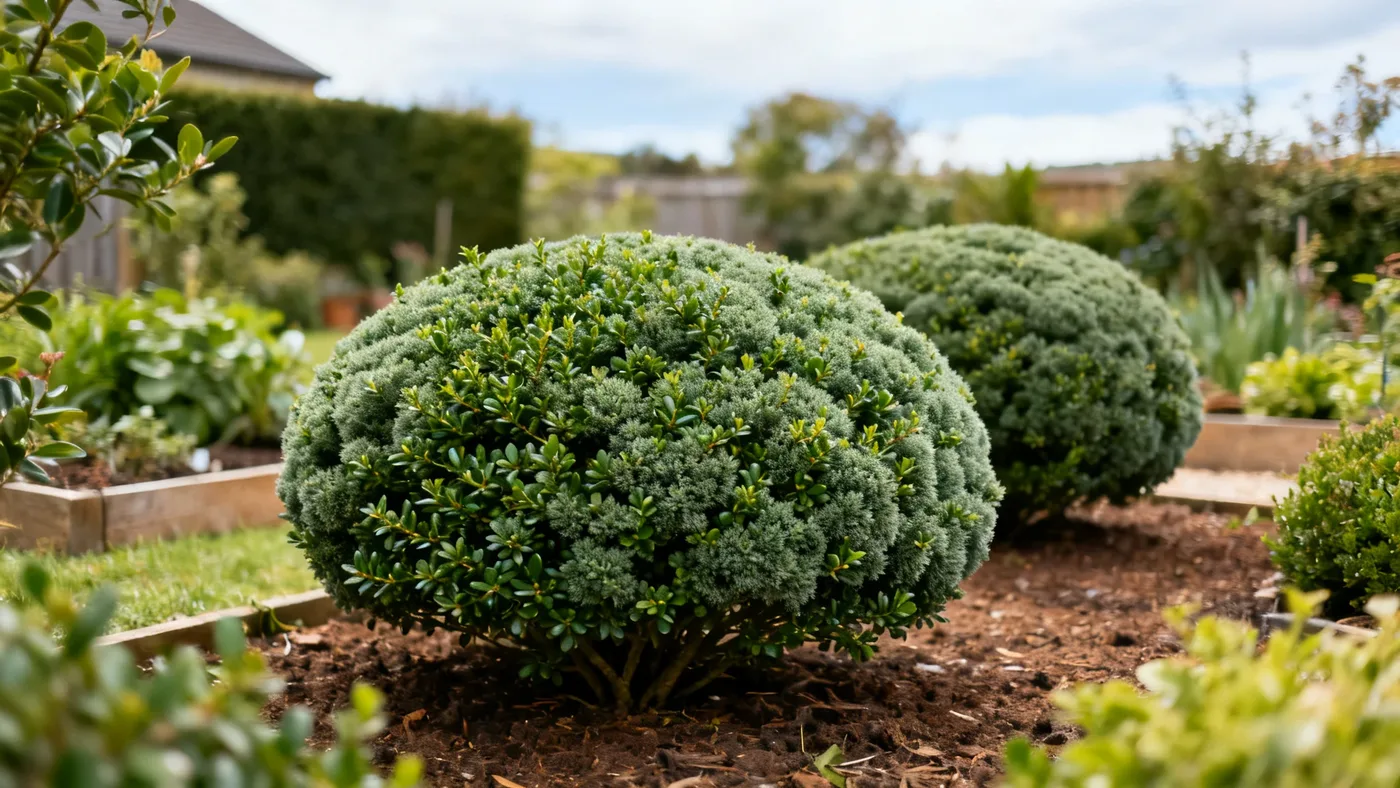
Fertilizing Soft Touch Japanese Holly for Healthy Growth
Soft Touch Japanese Holly is a low-maintenance evergreen shrub, but it still benefits from thoughtful feeding to maintain its dense, fine-textured foliage and vigorous mounding shape. Unlike some shrubs that demand frequent fertilizing, this holly responds best to light, annual nutrition applied at the right time with the right product. This guide walks you through exactly when, how, and what to use.
Why Fertilize Soft Touch Japanese Holly?
New plantings and established shrubs both benefit from balanced nutrition. In the first 1 to 2 years after planting, a young holly is building its root system and investing energy in branching and density. Without supplemental feeding, growth may slow, and foliage can look pale or sparse. Established plants, once mature, still appreciate a light annual boost in early spring to support that characteristic soft, rounded form.
Chlorosis, a yellowing of foliage with darker green veins, is a common sign of nutrient stress on Soft Touch hollies, especially if your soil is alkaline or naturally low in iron. The right fertilizer addresses this and keeps your shrub looking its best year-round.
Understanding Your Soil
Before you fertilize, know your soil's acidity. Soft Touch Japanese Holly thrives in acidic to slightly acidic soil, with a pH range of roughly 5.0 to 6.5. If your soil is significantly higher than 6.5, your holly will struggle to absorb nutrients, and chlorosis becomes more likely. A simple soil test from your local extension service or a DIY soil pH kit tells you where you stand. Many home improvement stores also carry inexpensive pH testers.
Why does pH matter? Holly roots can access iron, magnesium, and manganese more efficiently in acidic soil. If your pH creeps above 7.0, those nutrients become chemically "locked up," unavailable to the plant even if they're present in the soil. An acid-forming fertilizer helps correct this over time.
Materials and Ingredients You'll Need
- An acid-forming, slow-release shrub fertilizer or holly-specific fertilizer (look for formulations like 10-8-6 or similar NPK ratios)
- A handheld broadcast spreader or your hands (for small plants)
- Work gloves
- A watering can or garden hose
- A soil pH test kit (optional but recommended for the first application)
- A ruler or measuring tape (to measure application area)
Step-by-Step Fertilizing Instructions
Step 1: Choose Your Timing
Apply fertilizer in early spring, as new growth is beginning but before the plant's main flush of foliage. For most of the US, this means late February to early April, depending on your zone. The goal is to fuel the plant's own natural growth cycle, not to force erratic feeding in summer or fall. Early spring feeding ensures your holly has steady nutrients available when it's actively expanding.
Step 2: Select the Right Product
Choose an acid-forming, slow-release shrub or holly fertilizer. Look on the package for an NPK ratio (the three numbers showing nitrogen, phosphorus, and potassium). A balanced formulation like 10-8-6 or 12-4-8 works well. Avoid high-nitrogen lawn fertilizers, which promote soft foliage and can actually reduce the plant's density and hardiness. Slow-release formulations release nutrients gradually over weeks or months, reducing the risk of burn and providing steady, even feeding.
Step 3: Calculate How Much You Need
Mature Soft Touch Japanese Holly reaches 2 to 3 feet tall and 3 to 4 feet wide. For a single established plant of this size, use the rate specified on your fertilizer label, which typically calls for applying the product over the dripline (the area directly under the plant's canopy). For a young, smaller plant, use half the amount and increase slightly each year until the plant matures. Never over-fertilize. Light, consistent feeding outperforms heavy, infrequent applications.
Step 4: Prepare the Area
Clear any mulch, leaves, or debris from the base of the shrub to expose bare soil in a ring around the plant. Lightly rake the soil surface so the fertilizer makes good contact. This step ensures even distribution and helps granules settle into the root zone rather than sitting on top of mulch where they'll take longer to act.
Step 5: Apply the Fertilizer
Scatter the fertilizer evenly across the soil beneath the canopy, roughly from the base of the plant out to where the outer branches reach. If you're using a handheld spreader, follow the machine's rate settings. For small applications, your hands with work gloves are fine. Avoid piling fertilizer against the stem or against the base of the plant, which can burn tender bark. Keep it at least a few inches away from the main trunk.
Step 6: Water Thoroughly
Immediately after applying the fertilizer, water the area deeply with at least 1 inch of water from a soaker hose or sprinkler. This activates granules and carries nutrients down into the root zone. Watering also prevents any chance of fertilizer burn. Water until the soil is consistently moist 3 to 4 inches deep.
Step 7: Restore Mulch
Once the area is watered, replace any mulch you removed, keeping it 2 to 3 inches away from the base of the plant. Mulch helps retain soil moisture and maintain consistent soil temperature, both of which support steady nutrient uptake. A layer of 2 to 3 inches of wood chips or pine bark works well.
Tips and Common Mistakes to Avoid
Don't Over-Fertilize. One application in early spring is all your established Soft Touch holly needs in a typical year. More frequent feeding leads to soft, rank growth that lacks density and can invite pest damage. Over-fertilized plants also struggle in cold winters.
Test Your Soil if Foliage Yellows. If you see consistent chlorosis after the first year, have your soil tested or apply an acid-forming fertilizer formulated to lower pH. Acidifying sulfur, applied in fall, can help if your pH is above 6.5.
Water Before and After Fertilizing. If your region is in drought or your soil is very dry before you fertilize, water the area first. Applying fertilizer to dry soil invites burn. Similarly, watering immediately after application dissolves granules and carries them to roots.
Watch the Clock on Timing. Fertilizing late in summer (after June or July) can stimulate tender new growth that won't harden off before cold weather arrives. Stick to early spring, and let your holly's own growth rhythm guide you through the rest of the year.
Don't Apply Fertilizer to a Newly Planted Holly in Its First Few Weeks. Wait until late spring of the first year (after the initial transplant shock has passed) to begin fertilizing. A balanced transplant fertilizer or a dilute solution can be used 4 to 6 weeks after planting if growth seems sluggish, but full-strength fertilizing can wait until the following early spring.
Expected Results
After fertilizing in early spring, you should notice more vigorous shoot growth by late spring and early summer. New leaves will appear slightly darker and more numerous, creating a fuller, denser mound. Over the course of 4 to 6 weeks, the shrub's overall shape becomes noticeably more compact and defined. Chlorosis, if present, may begin to improve within 3 to 4 weeks of a single application, though severe iron deficiency may require a second light feeding or a chelated iron spray in mid-summer.
Soft Touch Japanese Holly grows slowly, at roughly 3 to 6 inches per year, so don't expect dramatic size changes within a single season. Instead, look for finer texture, deeper color, and improved branching density as signs that your fertilizing program is working. The shrub should feel fuller and more substantial when you look at it, even if its overall height has only increased a few inches.
Connecting Fertilizing to Overall Holly Care
Fertilizing works best as part of a complete care routine. A well-draining, humus-rich soil with consistent moisture supports nutrient uptake far better than compacted or waterlogged ground. If you're just beginning, the Soft Touch Japanese Holly care guide covers watering, pruning, and soil preparation in depth. For design ideas on where to place your holly and how it plays with other plants, explore landscape ideas for Soft Touch Japanese Holly.
Quick Reference: Fertilizing Checklist
| Task | Timing | Details |
|---|---|---|
| Test soil pH | Before first application | Target 5.0 to 6.5; if above 6.5, consider an acidifying product |
| Choose fertilizer | Any time | Acid-forming, slow-release shrub or holly fertilizer; avoid lawn fertilizers |
| Apply fertilizer | Early spring (late Feb. to early April) | One light application per year; scatter evenly under the canopy, 2-3 inches from trunk |
| Water thoroughly | Immediately after application | At least 1 inch of water to activate granules and carry nutrients into root zone |
| Monitor for chlorosis | Throughout growing season | If yellowing appears, retest soil; consider chelated iron spray in mid-summer |
| Prune if needed | Late winter or early spring before growth, or after main flush in early summer | Light shearing to maintain shape; Soft Touch rarely needs heavy pruning |