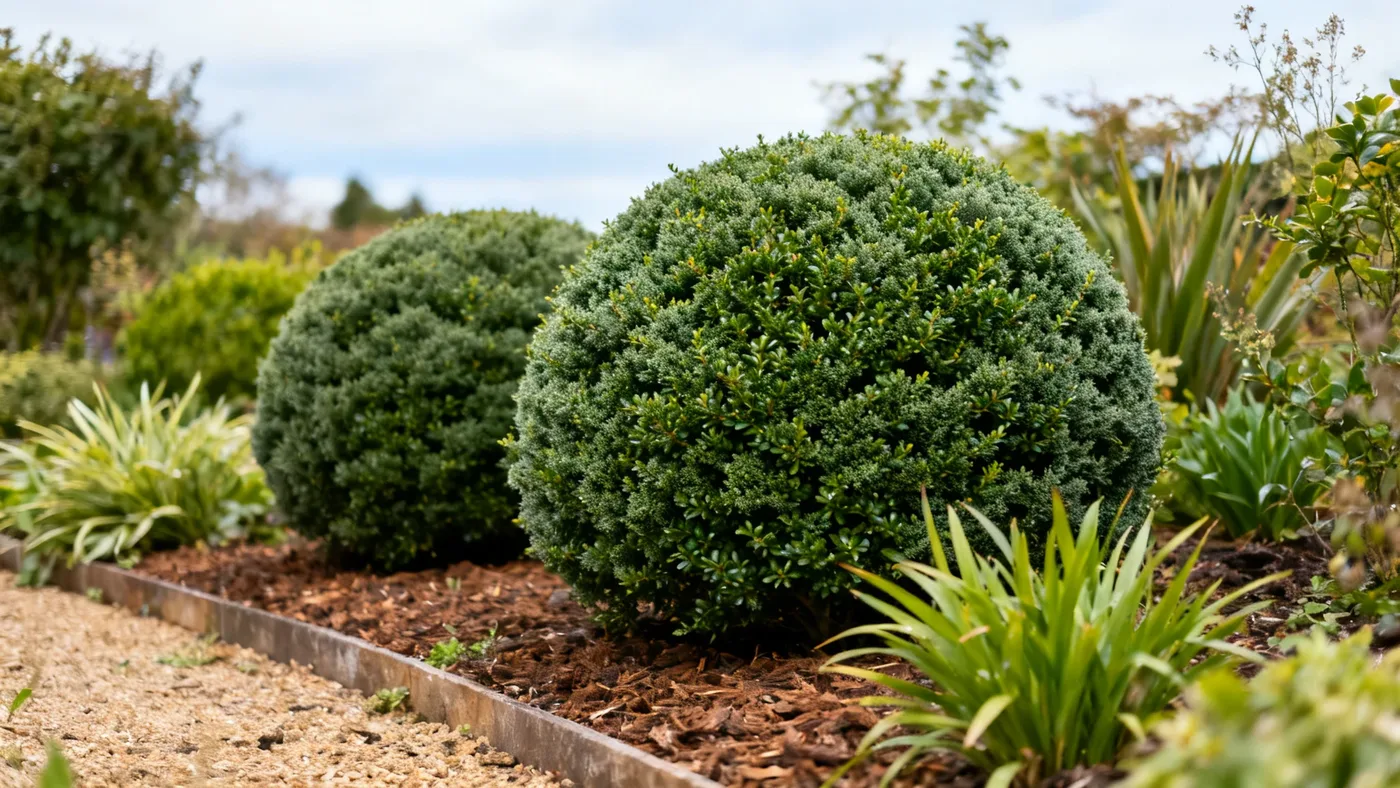
Landscape Ideas for Soft Touch Japanese Holly
Soft Touch Japanese Holly offers surprising versatility for a shrub that maxes out at 2 to 3 feet tall. Its naturally mounding form, fine-textured foliage, and low maintenance make it a workhorse in foundation plantings, hedges, and mixed borders. Whether you have a small space or a large landscape, this evergreen adapts to multiple design roles across USDA zones 5 to 8. Below are eight proven landscape ideas that show how to make the most of this reliable shrub.
1. Create a Low Formal Hedge
One of the most popular soft touch holly landscape ideas is using multiple plants to define garden edges or property lines with a low, disciplined hedge. Space plants 2.5 to 3 feet apart and they'll grow into each other over time, forming a dense screen. At maturity, your hedge will reach 2 to 3 feet tall and 3 to 4 feet wide, offering enough mass to look intentional without overwhelming perennials in front.
Light shearing in late winter or early spring keeps the form tight. Because growth is slow (roughly 3 to 6 inches per year), you won't be pruning constantly. A well-maintained hedge looks refined by early summer and stays neat through fall and winter, providing year-round structure when most other plants have gone dormant.
Practical takeaway: Plan for mature width when spacing. If you're edging a bed that's 12 feet long, three plants spaced at 3 feet apart will fill it perfectly without crowding.
2. Use as Foundation Planting
Soft touch holly foundation planting works exceptionally well for modern homes and traditional landscapes alike. The fine-textured leaves contrast beautifully with house siding and don't grow so tall that they block lower windows. Plant them 2 to 3 feet away from the foundation to account for mature width, and they'll fill the gap between ground and first-story sills.
This shrub tolerates part shade, which is valuable on north- or east-facing foundations where full sun isn't reliable. In hot climates, part shade actually improves foliage density. Moist, well-drained soil is ideal, so water consistently during the first 1 to 2 years as the plant establishes. After that, it needs average moisture, though not drought tolerance comparable to true drought-resistant shrubs.
Practical takeaway: Group three to five plants at staggered distances to create visual rhythm along your foundation, rather than planting them in a single line.
3. Combine with Shade-Loving Companions
Soft touch holly companion plants thrive in the same moist, acidic soil conditions. Pair this shrub with hostas, ferns, and azaleas for a lush, layered effect. The holly's dense evergreen mound provides year-round backbone, while hostas add bold foliage texture in summer and hydrangeas bring seasonal color. All share a preference for part shade and consistent moisture.
In zones 5 to 7, this combination works reliably. Zone 8 gardeners should site these combinations where afternoon shade is guaranteed, since part shade in hot climates improves foliage density on the holly itself. Amend soil with humus before planting; these plants love rich, moist ground. Boxwood is another excellent companion, though Soft Touch Japanese Holly is often chosen as a boxwood substitute because it has softer (non-spiny) foliage.
Practical takeaway: Design the bed with holly at the back, mid-height hydrangeas in the middle, and low hostas or ferns in front. This creates a natural tiered effect that matures beautifully together.
4. Mass Multiple Plants for Textural Contrast
For larger landscapes, mass planting Soft Touch Japanese Holly alongside finer and bolder foliage plants creates dynamic visual interest. Plant five to seven shrubs in a loose cluster, spacing them 2.5 to 3 feet apart. At maturity, they'll form a unified mound of soft, dark green texture that anchors the bed while requiring minimal pruning to maintain.
Massing also maximizes the deer-resistant qualities of the shrub. Deer tend to avoid it compared to many broadleaf evergreens, so a grouping acts as a buffer against browsing damage to more vulnerable plants nearby. The slow growth rate means you're planting for long-term impact; this is not a quick filler solution but a permanent landscape feature.
Practical takeaway: Underplant your massed hollies with spring bulbs (daffodils, tulips) and shade-tolerant ground covers to maximize the ground layer and reduce maintenance down the road.
5. Edge Planting Beds and Pathways
Where to plant soft touch japanese holly for low, structured edging is a practical question many gardeners face. Single plants spaced 2.5 to 3 feet apart create a gentle, repeating pattern along garden beds or meandering pathways. Unlike taller shrubs, this holly won't block sightlines while walking, yet it signals intentional garden structure and delineates space.
Edging with Soft Touch Japanese Holly also protects soil from foot traffic and defines bed perimeters without rigid borders. Plant in spring or fall, avoiding peak summer heat and hard winter freezes. The established plant tolerates average moisture once settled, though water during the first growing season to encourage deep roots.
Practical takeaway: Lay out spacing with string and marking paint before digging. Accurate spacing makes the pattern clear from the start and prevents later crowding.
6. Container Gardening for Patios and Decks
Soft Touch Japanese Holly works well in containers, making it a flexible choice for patios, entries, and deck surrounds. Plant in a pot at least 15 to 18 inches in diameter with drainage holes. Use moist, well-drained potting soil amended with peat moss or aged bark to keep conditions slightly acidic. Container plants dry faster than in-ground shrubs, so check soil moisture regularly during hot spells.
In colder zones (5 to 6), container plants need winter protection. Move pots to a sheltered location away from harsh wind, or wrap the container with burlap. The slow growth rate means your container plant won't outgrow its pot for several years, reducing repotting work. Pair it with trailing ivy or ornamental grasses for a sophisticated combination.
Practical takeaway: Set container-grown plants near an entry or seating area where you can observe them up close. The fine texture rewards close inspection.
7. Establish a Deer-Resistant Landscape
If deer pressure is a concern in your area, Soft Touch Japanese Holly is a relatively deer-resistant shrub compared to many broadleaf evergreens. It's not completely deer-proof, but browsing is less likely than on equally sized alternatives. Use it as the foundation of a deer-resistant landscape design, paired with other tough plants like azaleas and hydrangeas that share similar growing needs.
Combine deer resistance with good cultural practices: provide adequate water and mulch during establishment, and avoid over-fertilizing, which softens new growth and makes plants more palatable. In areas with high deer pressure, a combination of multiple deer-resistant species, spacing, and habitat management yields better results than relying on any single shrub.
Practical takeaway: Plant in groups rather than singletons. Massed plantings and varied textures confuse deer browsing patterns and make gardens less attractive as a food source.
8. Add Year-Round Structure to Small Spaces
In compact urban or suburban gardens, Soft Touch Japanese Holly provides essential winter interest and permanent structure. At 2 to 3 feet tall, it fits tight spaces without consuming square footage. Plant it against a fence, as a corner anchor, or in the center of a small courtyard where its evergreen form shows through all seasons.
The naturally mounding habit means minimal pruning is needed to maintain shape. Unlike deciduous shrubs that disappear in winter, this holly keeps its dense mound green year-round, defining the garden skeleton. In mixed borders, it holds down the background while deciduous perennials and shrubs take the seasonal spotlight, then steps back into supporting role once they fade.
Practical takeaway: Use Soft Touch Japanese Holly as a visual anchor or focal point in small gardens. Its consistent form and foliage create visual rest between seasonal plants and make small spaces feel organized.
Quick Reference: Landscape Planting Checklist
| Use | Plant Spacing | Expected Mature Size | Sun Requirement | Zones |
|---|---|---|---|---|
| Low hedge | 2.5-3 ft apart | 2-3 ft tall, 3-4 ft wide | Full sun to part shade | 5-8 |
| Foundation planting | 2-3 ft from house | 2-3 ft tall, 3-4 ft wide | Part shade ideal in hot zones | 5-8 |
| Mixed shade bed | 2.5-3 ft apart | 2-3 ft tall, 3-4 ft wide | Part shade | 5-7 |
| Massed planting | 2.5-3 ft apart | 2-3 ft tall, 3-4 ft wide each | Full sun to part shade | 5-8 |
| Pathway edge | 2.5-3 ft apart | 2-3 ft tall, 3-4 ft wide | Full sun to part shade | 5-8 |
| Container | 15-18 in. pot diameter | Varies; prune to size | Full sun to part shade | 5-8 (winter protection in 5-6) |
| Deer-resistant grouping | 2.5-3 ft apart | 2-3 ft tall, 3-4 ft wide | Full sun to part shade | 5-8 |
| Small space anchor | Single specimen | 2-3 ft tall, 3-4 ft wide | Full sun to part shade | 5-8 |
For comprehensive care details and seasonal maintenance schedules, refer to our Soft Touch Japanese Holly care guide.