Winter Care for Soft Touch Japanese Holly in Cold Climates
Late September is the right time to think about winter. If you grow Soft Touch Japanese Holly in zone 5, 6, or 7, you have a shrub that holds its fine-textured green foliage through the coldest months, but that doesn't mean it needs no attention. The real risks arrive in late fall and winter: exposed sites get leaf burn, containers freeze solid, and poorly drained soil turns treacherous after snowmelt. This guide walks through the practical steps to keep your Soft Touch holly thriving from November through March.
Why Winter Matters for Soft Touch Holly
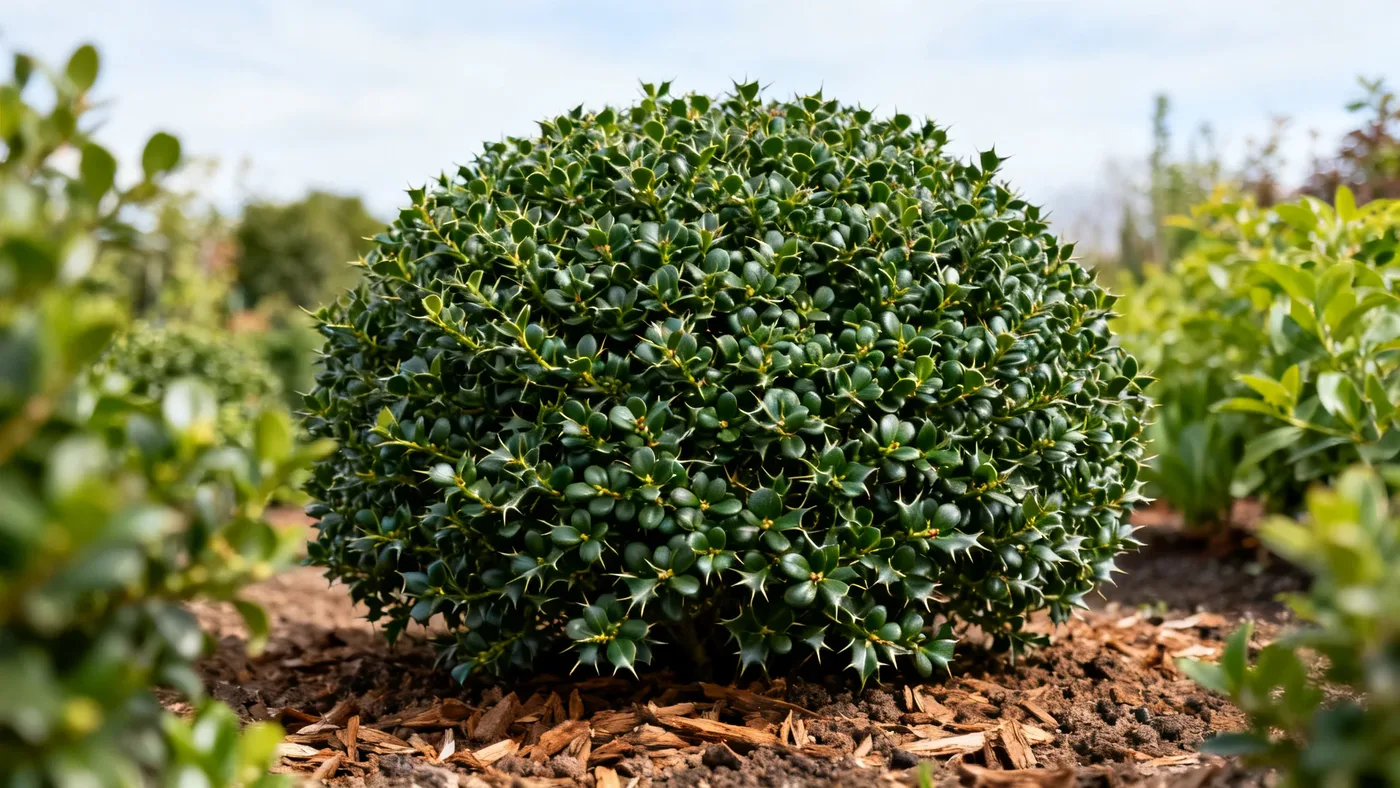
Soft Touch Japanese Holly maintains its dense, mounded form year-round, which is part of its appeal. But that persistent foliage is also why it needs your care during winter dormancy. Unlike deciduous shrubs, evergreens lose water through their leaves even in freezing weather, and they cannot replace that water when soil is frozen. Add wind exposure or repeated freeze-thaw cycles, and you get winter leaf burn, a browning or bleaching of foliage that weakens the shrub's appearance for months after spring arrives.
Winter leaf burn is the most common winter problem for Soft Touch holly in exposed sites. The shrub is hardy to zone 5, which means it survives the temperature itself, but the combination of cold, wind, and dry soil depletes the foliage. The good news: most of these problems are preventable with basic preparation in fall.
Site Selection and Wind Protection
The single biggest factor in winter survival is site exposure. Soft Touch holly does best in part shade during hot summers, but winter protection is different. If your shrub sits on the north side of a house or the west side exposed to all-day wind, it faces more stress than one tucked against a windbreak.
If you are still choosing a location, plant in a spot that gets morning sun but afternoon protection from a wall, fence, or tree windbreak. This reduces temperature swings and gives foliage relief from drying winter winds.
If your Soft Touch holly is already in an exposed site, you have two options in late October. The first is a burlap screen or shelter, staked on the windward side. This does not need to fully enclose the shrub, just break the worst wind exposure. The second is to accept some leaf burn on exposed foliage and plan for it to recover in spring, which it typically does by late May.
Fall Watering and Soil Preparation
Soft Touch holly is not drought tolerant and needs consistent moisture even in its first year. By October, your established shrub has a smaller water need, but soil moisture still matters. Soil that enters winter too dry is soil that cannot supply water to roots when the shrub needs it most, because frozen soil becomes impenetrable.
In mid-October, water your Soft Touch holly deeply if your region did not get at least 1 inch of rain that week. Soak the soil, not just dampen the surface, so moisture reaches the root zone 4 to 6 inches down. This "fall deep watering" is far more effective than occasional winter watering.
Check your soil drainage now, too. Soft Touch holly needs well-drained, humus-rich soil. If water pools on top during rain or sits in the root zone, amend with compost in fall or plan to dig and improve the planting hole next spring. Poor drainage in winter leads to root rot faster than any freeze.
Winter Leaf Burn and How to Prevent It
Winter leaf burn appears as browning, bleaching, or scorching of foliage, usually on the side facing prevailing winds or full winter sun. It is not frost damage, which would kill entire branches. Leaf burn is cosmetic injury to individual leaves that recover or shed by late spring.
Prevention starts in fall with the wind shelter mentioned above. A second step is anti-desiccant spray, an organic coating applied in late October or November before the coldest weeks. These sprays seal the waxy cuticle of leaves and reduce water loss through winter. They work best applied on a calm, dry day when temperatures are above 40°F and no rain is forecast within 24 hours. Look for products labeled for evergreen protection.
If leaf burn does appear in February or March, do not prune it off immediately. Wait until April when new growth starts. Brown leaves often drop on their own, and early pruning can encourage tender new growth that a late frost will damage.
Container Care in Winter
Potted Soft Touch holly needs different winter protection than in-ground shrubs. Roots in containers freeze faster than roots in soil because the container walls conduct cold directly to the root ball. In zone 5 or 6, an unprotected potted holly can suffer root damage even though the same shrub in the ground would be fine.
Move containers against a house wall or to a sheltered spot in late October. Wrap the pot itself with burlap or bubble wrap, leaving the foliage exposed. A 2 to 3 inch layer of mulch or leaves piled around the outside of the pot provides extra insulation.
Water potted hollies every 2 to 3 weeks through winter if there is no snow cover. Soil in containers dries faster than ground soil, even in cold weather. Water only enough to keep the soil slightly moist, not waterlogged, since frozen waterlogged soil damages roots more than dry soil.
In zone 7, container protection is less critical but still worth doing if you are moving the pot to a prominent display location. In zones 5 and 6, it is essential.
Fertilizing and Pruning Before Winter
Do not fertilize Soft Touch holly in fall or winter. Growth has stopped, and new tender shoots encouraged by fertilizer will be damaged by freeze. Stop fertilizing by early September. Resume with a light application of slow-release holly fertilizer in early spring, around March.
Prune only to shape the shrub in late winter, around February or early March before new growth emerges. Light shearing works well because Soft Touch holly naturally grows in a mounded form. Avoid heavy pruning in late fall, which can trigger tender new growth that frost will injure.
Winter Watering: The Overlooked Step
Many gardeners forget that evergreens need water in winter, not just in summer. Soft Touch holly loses moisture through its leaves even in December and January, and it cannot replace that water from frozen soil.
On warm days above 40°F, when the soil is not frozen, water your Soft Touch holly if the soil feels dry 2 inches below the surface. This is most important in years with little snow cover and high winter sun exposure. You may need to water only once a month, but that one watering can prevent significant leaf burn.
Spring Assessment and Recovery
By late April or early May, winter damage becomes clear. Some foliage may be brown or bleached, especially on exposed sides. New growth will emerge from the branch tips and base, pushing out soft, bright green leaves.
Once new growth is 2 to 3 inches long, prune out any badly damaged twigs. The shrub will fill in quickly. Soft Touch holly, though a slow grower at 3 to 6 inches per year overall, recovers well from winter injury and returns to its dense, mounded shape by mid-summer.
For more year-round care strategies, see the full Soft Touch Japanese Holly care guide.
Quick Reference: Winter Care Checklist
| Task | Timing | Why It Matters |
|---|---|---|
| Deep water soil | Mid-October | Roots need moisture stored before soil freezes |
| Install windbreak (if exposed site) | Late October | Reduces winter leaf burn from drying winds |
| Apply anti-desiccant spray (optional) | Late October or November | Protects foliage from moisture loss in extreme cold |
| Mulch potted containers | Late October | Container roots freeze faster than in-ground roots |
| Stop fertilizing | Early September | Prevents tender growth damaged by frost |
| Water containers | Every 2-3 weeks, winter long | Container soil dries faster than ground soil |
| Water in-ground shrubs (warm days above 40°F) | Once monthly if no snow or rain | Evergreens lose water year-round |
| Prune damaged growth | Late April, once new growth appears | Removes cosmetic winter burn and shapes regrowth |