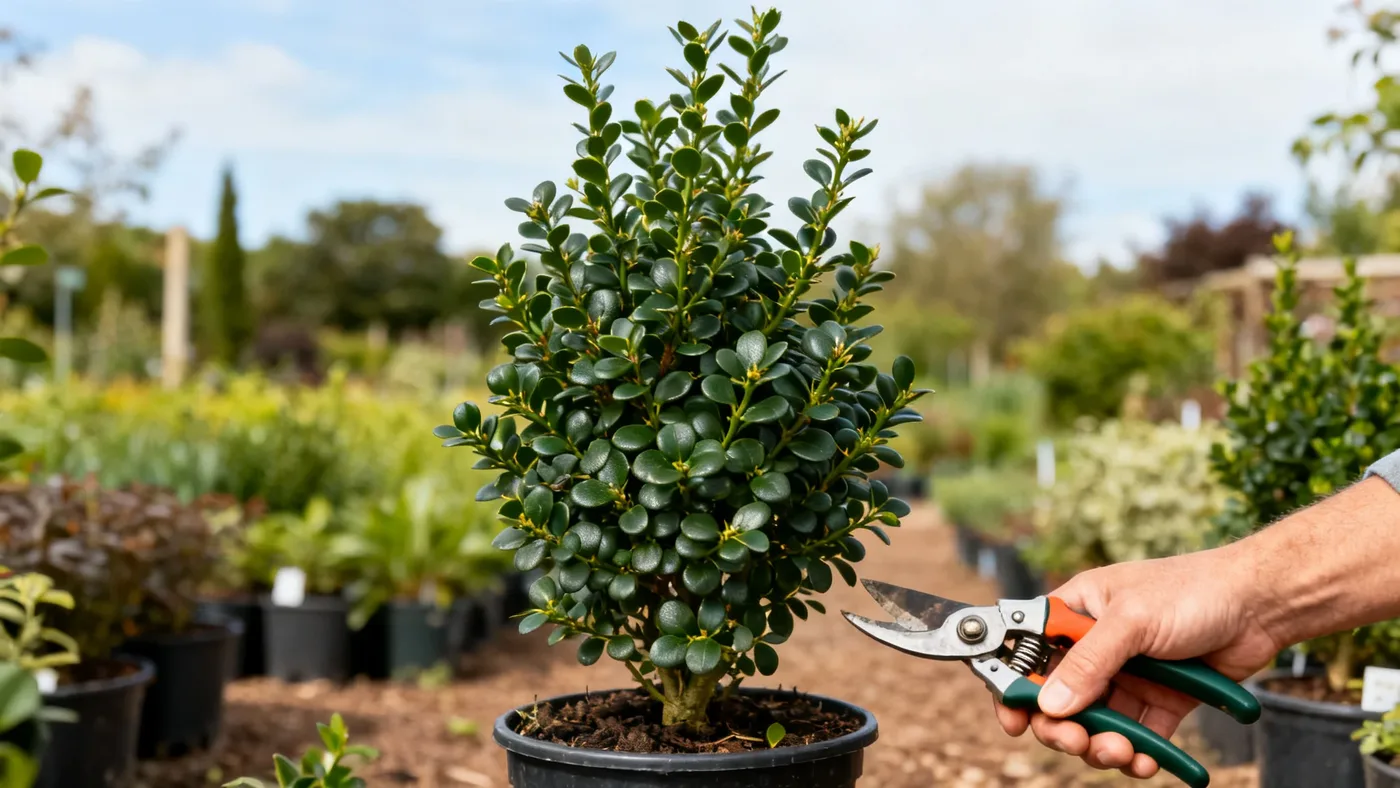
How and When to Prune Soft Touch Japanese Holly
Soft Touch Japanese Holly is one of the most forgiving shrubs to maintain. Its naturally dense, mounding form means you can keep it tidy with minimal intervention, or shape it more intentionally if you prefer. Unlike spiny hollies that demand careful handling, Soft Touch's soft foliage is easy on the hands, making pruning a straightforward task. The key is timing your cuts right and understanding what this slow-growing plant actually needs.
When to Prune Soft Touch Japanese Holly
Timing matters more than technique for this plant. Soft Touch blooms in late spring (May through June), with inconspicuous greenish-white flowers. If you want to avoid cutting off buds, work around that bloom window.
Late winter or early spring is the prime window. Prune before new growth emerges, roughly from late February through March in most zones. At this point, buds are visible on the branches, so you can see exactly where new leaves will break. The plant responds quickly with dense new foliage once temperatures warm.
Early summer (right after the main flush of new growth, typically late June or early July) works well too. By then, the spring growth has hardened off, and a light trim at this time tidies the plant without setting it back. Avoid heavy pruning after mid-August, as new tender growth won't harden before winter.
Avoid hard pruning in fall or early winter. New shoots triggered by late pruning may not survive a hard freeze. Since Soft Touch grows slowly (about 3 to 6 inches per year), it doesn't need aggressive cutback anyway.
Materials You'll Need
- Hand pruners (bypass or anvil): A sharp pair makes clean cuts. Bypass pruners (scissor-action) are gentler on soft foliage.
- Hedge shears (optional): For shearing a row or larger shrub. Hand pruners work fine for individual plants.
- Loppers: Only needed if you're cutting branches thicker than pencil width, which is rare on young plants.
- Pruning saw: For any branches over 1 inch diameter, though Soft Touch rarely needs this.
- Gloves: Leather or nitrile work. The foliage is soft, but you'll still want protection.
- Disinfectant (optional): Rubbing alcohol or a 10-percent bleach solution. Wipe blades between cuts if moving between plants or if you suspect disease.
- Tarp or drop cloth: To catch trimmings and keep your work area tidy.
How to Shape and Prune Soft Touch Holly
The steps below assume light shearing to maintain shape. Soft Touch reaches 2 to 3 feet tall and 3 to 4 feet wide at maturity, and it tends to fill in on its own.
Step 1: Assess the Plant
Walk around your shrub before you cut. Look for uneven areas, crossed branches, or any dead or diseased wood. Soft Touch foliage should be deep green and firm. If you see brown, dried, or blackened sections, those likely came from root issues or winter burn and won't green back up; remove them.
Step 2: Remove Dead or Diseased Material
Cut out any dead, crossing, or rubbing branches first. Make cuts flush to the base or to a side branch that faces outward. Don't leave stubs. This is the most important step and actually improves air circulation, which helps prevent fungal leaf spots.
Step 3: Lightly Shear the Perimeter
Using hand pruners or hedge shears, make gentle heading cuts (cuts that remove the tip of a shoot) around the outside of the shrub. Remove no more than one-third of the new growth. For Soft Touch, this typically means cutting 2 to 4 inches off the branch tips.
The goal is to maintain the natural mounded shape or create a gentle dome. Don't try to force a formal box shape or pyramid; Soft Touch resists it and will look stiff. Work from the top down and sides, stepping back every few minutes to check symmetry.
Step 4: Thin Internal Growth (Optional)
If the shrub is very dense and you want to improve air circulation, make thinning cuts inside the canopy. Remove an entire shoot at its base or back to a side branch. This opens up the interior without changing the outline. This is especially helpful in humid climates where leaf spot can be an issue.
Step 5: Clean Up and Water
Rake up trimmings and dispose of them. If you removed diseased material, don't compost it; bag it or burn it if local rules allow. After pruning, water the plant if the soil is dry. Pruning is a bit of stress, and consistent moisture helps the plant recover and push new growth.
Tips and Common Mistakes
Tip: Prune when dry. Wet foliage can harbor disease. Wait until morning dew dries or choose a dry day in late winter or early summer.
Tip: Use sharp tools. Dull blades crush tissue and invite disease. Sharpen your pruners at least once a season, or before a big job.
Tip: Don't over-prune. Soft Touch is a slow grower. If you remove too much wood in one season, the plant takes months to fill back in. One-third rule is your friend: never remove more than one-third of the stem length in any one year.
Common mistake: Pruning too late in the year. Cutting in October or November can trigger new soft growth that gets nipped by hard frost. Stick to late winter and early summer.
Common mistake: Shaping into a tight formal hedge. Soft Touch looks best as a soft, naturally mounded shrub. If you force a rigid shape, it requires constant maintenance and ends up looking unnatural. The less you prune, the better it looks.
Common mistake: Ignoring diseased wood. If you see black spotting, brown edges, or wilted leaves, remove that material immediately. Soft Touch can develop leaf spot in wet conditions. Thinning the plant after pruning improves air flow and may help prevent it.
Tip: Prune to maintain size, not force growth. Since Soft Touch grows 3 to 6 inches per year, light annual pruning keeps it looking full without creating gaps. Heavy pruning doesn't make it grow faster; it just makes you wait longer for regrowth.
Expected Results
After pruning, Soft Touch may take 2 to 4 weeks to push new growth, depending on season and temperature. If you prune in late winter, expect visible regrowth by late April or May. Early summer pruning leads to visible recovery within 3 to 4 weeks if temperatures stay warm and water is consistent.
The plant's dense, mounding habit tends to fill in naturally, so you may not need to do much more than a once-yearly light shearing to keep it neat. Some gardeners prune twice a year (late winter and early summer), but once a year is usually enough. If you leave it unpruned, Soft Touch still looks good due to its natural form, though it may gradually become slightly looser and less formal.
For more detailed care information, see our Soft Touch Japanese Holly care guide. Healthy soil moisture is also key to plant vigor and recovery after pruning. Read our guide on watering Soft Touch Holly the right way to dial in your routine.
Quick Reference: Pruning Soft Touch Japanese Holly
| Aspect | Guideline |
|---|---|
| Best timing | Late winter or early spring (before new growth); or early summer (after spring flush) |
| Avoid | Fall and early winter; heavy pruning after mid-August |
| Amount to remove | No more than one-third of new growth per year (2 to 4 inches on branch tips) |
| Frequency | Once per year for light shaping; twice per year for formal maintenance |
| Tools | Sharp hand pruners; hedge shears for larger plants |
| Regrowth time | 2 to 4 weeks for visible new shoots; full fill-in in 4 to 8 weeks |
| Annual growth | 3 to 6 inches per year (slow growth) |
| Shape goal | Maintain natural mounding form; avoid forcing rigid formal shapes |