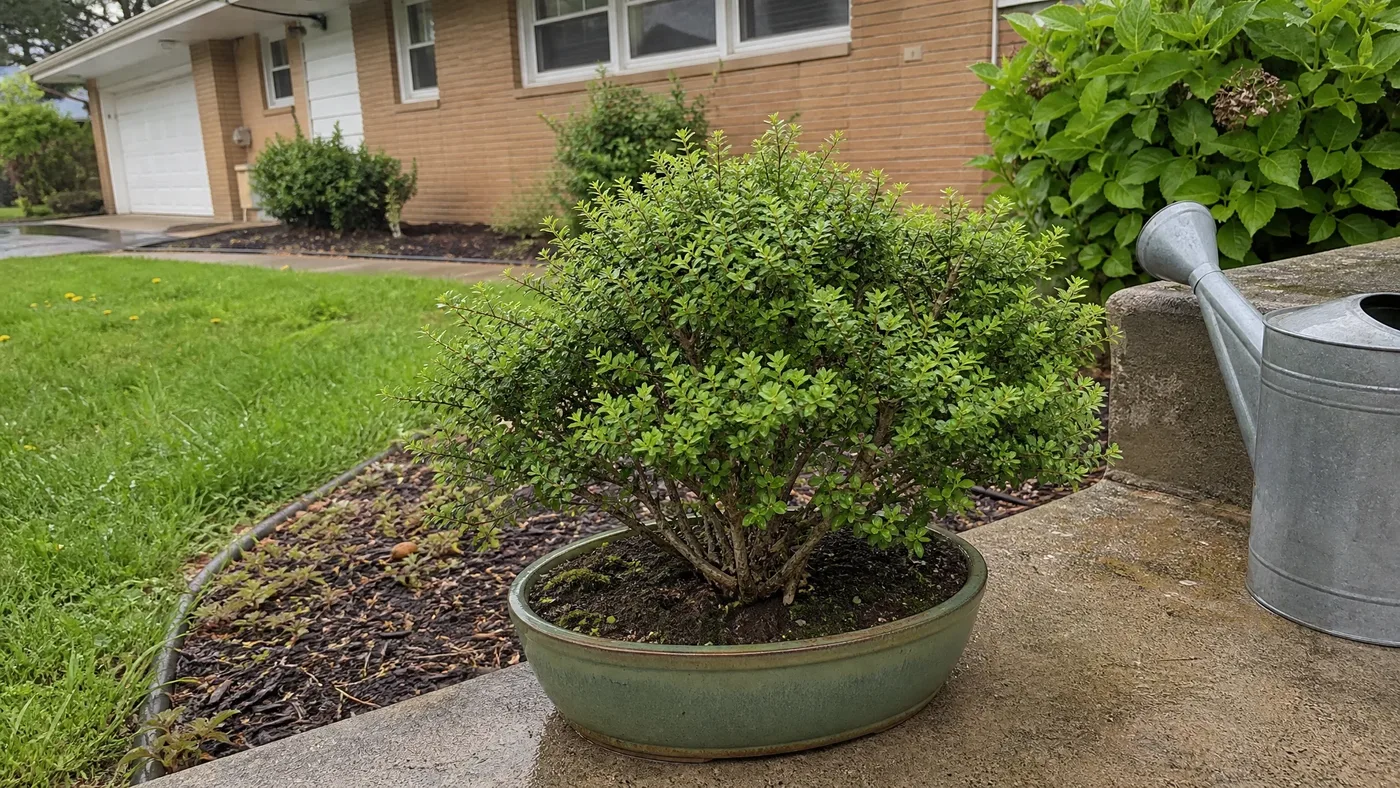
Growing Soft Touch Japanese Holly as Bonsai: A Starter Guide
Picture a one-gallon nursery pot on a bench, packed with crowded stems. If you could keep only three branches, which three would they be? That question is bonsai in miniature, and the answer shapes everything after it. Choose badly and you end up with wire scars on soft bark, a rootball that stays wet and rots, or a pot of roots frozen solid in January while the top still looks fine.
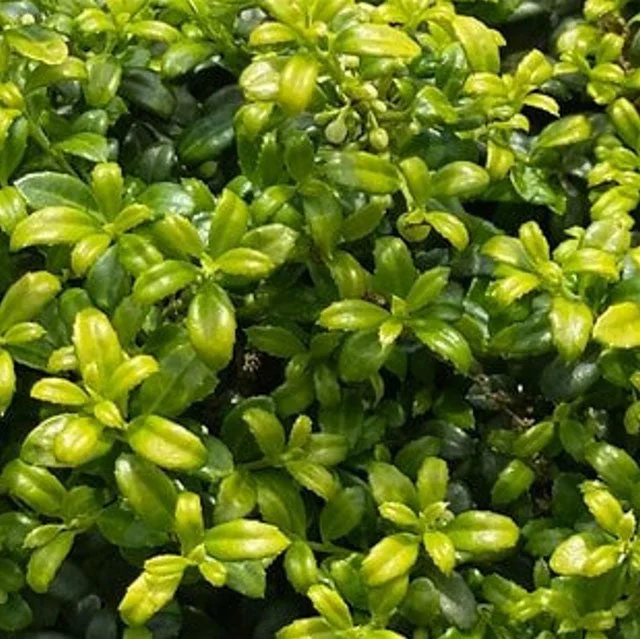
This article talks about choosing, wiring, pruning, repotting and wintering a Soft Touch Japanese holly bonsai and answers the questions customers ask us most. Read on to learn how to pick a plant worth training, how long wire can stay on, how often the roots need attention, and how to tell after one year whether your tree is on track.
Choosing Nursery Stock Worth Training
Walk down a bench of one-gallon Soft Touch and pick up three plants. Two will look like tidy little mounds, because that is how they were grown to sell. The third has a thicker trunk that leans a little, with a few branches starting low. That third plant is your bonsai candidate, because a mound of equal stems has nothing to build a tree from.
Two terms matter here. Trunk taper means the trunk is wider at the base and narrows as it rises, the way an old tree does. Low branches are those that start near the soil line, and they matter because the lowest branches carry the whole design. Branches you need low on the trunk are far easier to keep than to grow later.
Soft Touch starts with an advantage. It tops out at 2–3 feet in the landscape while the species reaches 5–10 feet, so its leaves and shoots are already scaled for a small tree. Check these points before you choose:
- Pick a trunk that is clearly thicker at the base than at the first branch, even if the difference is small.
- Look for at least three well-spaced branches on different sides of the trunk, one of them low.
- Choose deep green leaves with no yellow cast and no tiny stippling on the undersides.
- Slide a finger down the pot rim to feel for roots circling hard against the wall, which is easier to fix now than later.
Our buying guide covers general plant health checks in more detail.
Why Soft Touch Japanese Holly Bends Without Breaking
Take a young shoot between your thumb and finger and bend it to a right angle. It gives, and it springs back when you let go. You can do that bare-handed because the leaves are soft-textured and without the sharp spines typical of Japanese holly. Many spinier selections make you work with gloves or tweezers.
That give comes from young wood, which is green and full of moisture. Older wood has turned woody (the grower's word is lignified) and holds its position, so it cracks if you force it. The practical rule is simple. Bend young shoots freely, bend older branches a little at a time, and stop the moment you hear creaking.
What Flexible Wood Means for Shaping
Flexible wood lets you set a curve with wire instead of waiting years for it to grow that way. But the real goal is ramification, the repeated splitting of branches into finer and finer twigs. Think of a road map seen from above, with highways splitting into streets and then driveways. A good bonsai canopy has that many levels of division.
Wire sets the highways, meaning the main branch lines. Pruning builds the driveways, the fine twigs at the ends. Keep that division of labor in mind through the next two sections.
Wiring the Branches of Soft Touch Japanese Holly
A branch wired well looks like it grew that way. A branch wired badly has a bright spiral scar that stays visible for years. We often see wire left on for "one more month" because the tree looks fine, and then the bark has swollen around it. Treat wire as a splint, not a leash. It holds the shape only until the wood sets.
Because the leaves have no sharp spines, you can work close to the branch with your fingers and see exactly where each coil sits. That is a real advantage over spiny hollies, and it makes careful wiring faster.
Choosing and Applying Wire
Choose wire that is thin enough to wrap easily but stiff enough to hold the branch where you bend it. Test it on one branch: bend, let go, and see if it springs back. If it does, use heavier wire. Thick wire on a thin shoot is the more common error, because it crushes the soft bark of Soft Touch.
- Anchor the wire first, either around the trunk or buried in the soil of the pot.
- Wrap the branch at a shallow, even diagonal, with the coils snug but not pressing into the bark.
- Wrap in the direction the branch will curve, and make the bend with the wire on the outside of the curve so it supports the bend.
- Bend slowly in small steps, then check that no leaves are pinched under the wire.
Knowing When the Wire Comes Off
The wire stays on until the branch holds its curve without help, and it comes off sooner than most people expect. Look at it often during the growing season, when new wood thickens fastest. As soon as the wire starts to press a groove into the bark, remove it. Cut the wire away in short pieces rather than unwinding it, which can snap the branch you just set.
Cutting Back to Build Fine Branching
Look at a shoot that has stretched out with leaves only at the tip. The stretch of bare stem behind them will never produce fine twigs unless you shorten it. Cutting the shoot back to just above a pair of leaves forces buds near that point to wake up, and one long shoot becomes two or three short ones.
Soft Touch can be pruned to manage its size, and its species tolerates severe pruning. Bonsai work differs from hedge work, though. Shearing flattens everything to one surface, which is why our general pruning guide suits shrubs in the ground. On a bonsai you cut individual shoots and choose each one.
Use this table to match the technique to the job.
| Technique | Tool | Best used for |
|---|---|---|
| Pinching | Fingertips | Soft new tips during the growing season, to keep shoots short and twiggy |
| Trimming back | Sharp scissors | Shoots that have grown past the outline, cut just above a leaf pair |
| Structural cut | Concave cutter | Removing a whole branch or shortening a thick one before spring growth |
Soft Touch has small leaves and a compact habit, which UF/IFAS says make Japanese hollies ideal for close clipping. Never strip a branch of all its leaves, because a branch with no foliage loses its ability to feed itself.
Before each cut, ask which way the new shoots will grow. Cut to a bud that points where you want the branch to go, usually outward and slightly up, and avoid buds that point back toward the trunk.
Trimming Roots and Repotting Soft Touch Japanese Holly
Slide the tree out of its pot in early spring and you will probably find the roots wound in a tight coil around the outside, with soil in the middle. That is the cue. Root pruning means trimming the outer and bottom roots to make room for fresh soil, so the tree keeps growing fine feeder roots instead of thick circling ones.
Soft Touch grows at a moderate rate and a pot holds it back further, so it needs this less often than a fast shrub. Do not repot on a calendar. Lift the tree every so often and repot only when the roots fill the pot. The shrub transplants easily, which is what you want from a tree you will unpot repeatedly.
Bonsai Soil and Drainage
Use a gritty, fast-draining mix that holds some moisture and stays acid. Alkaline soils make Japanese holly leaves yellow, and the cultivar is listed as acid soil tolerant. Drainage is not optional, since the University of Washington notes that Ilex crenata is highly susceptible to root rot. For more on soil, see our soil guide.
The Repotting Steps
- Water the tree the day before so the roots are supple.
- Remove the tree and comb the outer roots free with a chopstick or root hook.
- Trim away the circling and thickest roots, keeping the fine, fibrous ones.
- Put fresh mix in the pot, set the tree, and wire it through the drainage holes so it cannot rock.
- Water in well and keep the pot out of strong wind and hot sun for a few weeks.
Our container guide covers pot choice and routine watering.
Sheltering a Potted Soft Touch Japanese Holly Through Winter
A shallow bonsai pot freezes solid from every side. In the ground, soil insulates roots. In a pot, only a thin wall of clay or plastic stands between the roots and the air. One extension source warns that container-grown Japanese holly must be protected because the roots will be winterkilled when temperatures drop much below 20°F.
That matters because the cultivar grows in zones 5a through 9b. Those zones describe plants in the ground. A bonsai in a pot needs more help than the zone number suggests, especially toward the cold end.
Cold and Wind
Cold is only half the problem. Soft Touch is evergreen, so its leaves keep losing moisture to winter wind while frozen roots cannot replace it, and the leaves turn brown. Place the species in protected areas to prevent damage from winter's cold winds.
Practical Shelter
Move the pot against a wall out of the wind, group pots together, and bank mulch or leaves around them. In colder zones, an unheated garage or shed can work if the tree still gets some light. Keep the rootball slightly moist, since dry roots are more vulnerable. Our winter care guide covers the in-ground side.
Reading Progress in Your Soft Touch Japanese Holly Bonsai
About a year in, run your thumb along a branch you wired. Is there a groove? Are there new leaf pairs along the inner part of the branch, not only at the tip? Those two checks tell you more than any measurement. One of the most common questions we get is whether the tree should look like a bonsai after one season. It should not.
Signs the tree is on track:
- New shoots appear along the branches and not just at the tips, which means the pruning is working.
- Leaves are deep green and the same size as before, not larger and floppy.
- Set branches hold their curve with the wire off, and the bark is unmarked.
- Fresh roots with pale tips show up when you repot.
When Something Is Off
Yellowing leaves usually point to alkaline soil or water, or to a rootball that stays wet. Soft Touch wants full sun, so a tree that thins on its inner branches may need a brighter spot. Check the leaf undersides for spider mites and scale, both of which are possible pests.
Planning Next Year
Pick one major job per year: a second round of wiring, a structural cut, or the first repotting. Doing everything at once stresses a slow-growing tree. Our care guide covers the routine feeding and watering that keeps it all going.
Your First Year With a Soft Touch Japanese Holly Bonsai
A modest goal for year one is this: three chosen branches, each with a set curve, the wire off, and short new shoots growing along them. The tree should come through winter with deep green leaves. If your tree can do that, it is on track, however small it still looks.
Go slowly, bend young wood and cut with purpose. Soft Touch rewards patience more than force.
Soft Touch Japanese Holly
Nursery-grown Soft Touch Japanese Holly in sizes from 1 Gallon Shrub, shipped to your door.
From $80.55
Shop Now →Our growers raise Soft Touch on our farms in full sun and acid soil, and they watch leaf color, new shoots and winter wind through the year, much as you will with your tree. We ship only top-quality shrubs we would plant ourselves, so the holly you train begins with a healthy start. If a bonsai of your own appeals to you, stop by our shop and meet the hollies we have waiting.