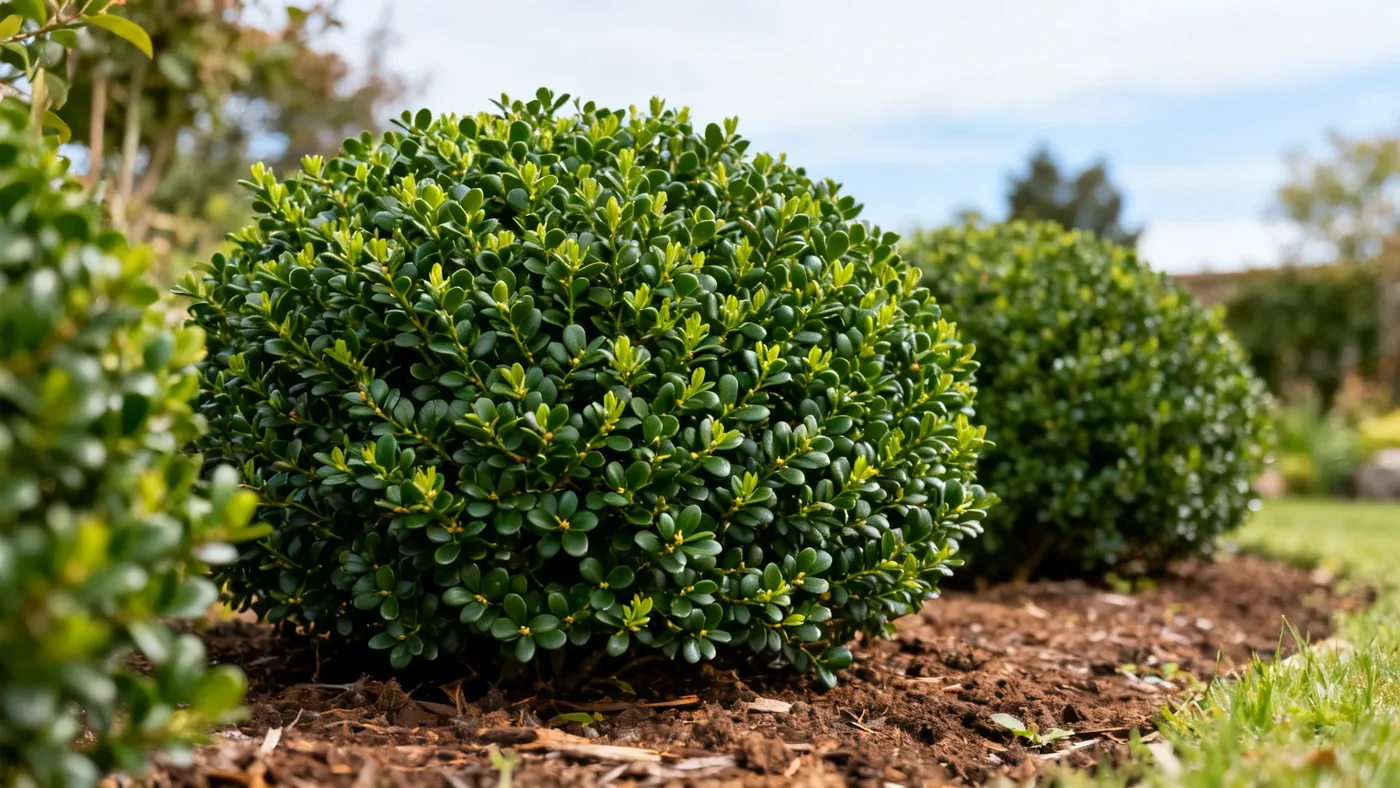
How Big Does Soft Touch Japanese Holly Really Get?
When you're planning where to plant Soft Touch Japanese Holly, size is everything. This slow-growing evergreen shrub reaches a predictable, manageable size that makes it perfect for tight spaces, hedges, and foundation plantings. Unlike fast-growing plants that quickly outgrow their spots, Soft Touch stays compact for years, giving your landscape room to breathe.
Basic Size and Growth Questions
What is the mature size of Soft Touch Japanese Holly?
Soft Touch Japanese Holly typically matures to 2 to 3 feet tall and 3 to 4 feet wide. This mounded, naturally compact form means you get substantial foliage coverage without needing an aggressive pruning schedule. The width-to-height ratio makes it ideal for layering in landscapes where you want visual weight without vertical dominance.
How fast does Soft Touch Japanese Holly grow?
Soft Touch is a slow grower, adding roughly 3 to 6 inches per year. At this pace, it takes 3 to 5 years to reach mature size. This slowness is actually beneficial: it means your hedges stay crisp, your foundation plantings hold their shape, and you're not constantly fighting with an overgrown shrub.
How long does it take Soft Touch Holly to reach full size?
Plan on 3 to 5 years for Soft Touch to develop into its mature mounded form. In the first year or two, you'll mostly be watching the plant establish strong roots; visible above-ground growth accelerates in years two through four. By year five, you should have a fully mature, 2 to 3-foot-tall plant ready for whatever landscape role you've planned.
Is the mature height always 2 to 3 feet?
Yes, 2 to 3 feet is the standard mature height range. The width typically spreads to 3 to 4 feet, creating a mound wider than it is tall. You can prune to keep it smaller if space is limited, but without heavy pruning, expect the plant to fill out to these dimensions once established.
Does Soft Touch Holly get taller in warmer climates?
Soft Touch can be grown in USDA zones 5 to 8, though performance in zone 8 varies with local heat and humidity. In the warmest zones within its range, the plant may reach the upper end of its 2 to 3-foot height, but it won't dramatically exceed these dimensions. Check your local extension service for climate-specific growth expectations.
Comparison to Other Shrubs
How does Soft Touch Holly compare in size to boxwood?
Soft Touch and boxwood are similar in mature size and growth rate, which is why Soft Touch is sometimes marketed as a boxwood substitute. Both are slow-growing evergreens with fine foliage and compact form. The main difference is that boxwood tends to be denser at smaller sizes, while Soft Touch develops its mounded shape more gradually.
Is Soft Touch Holly smaller than other Japanese Holly cultivars?
Soft Touch is not the absolute smallest Japanese Holly (that would be cultivars like 'Helleri'), but it is a relatively compact form. Cultivars like 'Sky Pencil', which grows tall and narrow, are very different in form. Soft Touch sits in the middle of the Japanese Holly size spectrum, making it versatile for many uses without being the tiniest option available.
Is Soft Touch Holly considered a dwarf shrub?
At 2 to 3 feet mature, Soft Touch is best described as compact or low-growing rather than true dwarf. True dwarfs stay under 1 foot; Soft Touch offers more landscape presence. This size makes it useful for foundation plantings, low hedges, and mass plantings where you want structure without excessive height.
Spacing and Hedging
How far apart should I plant Soft Touch Holly for a hedge?
Space plants 2.5 to 3 feet apart for a low hedge or massed planting. At this spacing, plants will touch and fill in within a few growing seasons, creating a dense, unified form. Closer spacing accelerates this effect; wider spacing works if you're patient and willing to wait longer for full coverage.
Will Soft Touch Holly create a dense screen on its own?
Yes, Soft Touch develops dense foliage once established and works well for creating low visual screens or privacy borders. The natural mounded form means you don't need heavy shearing to maintain density. For taller screens, you would layer Soft Touch with taller evergreens rather than relying on Soft Touch alone.
Can you make Soft Touch Holly smaller or larger through spacing?
Spacing controls how quickly plants fill an area, but each individual plant still reaches its mature 2 to 3-foot height and 3 to 4-foot width. Wider spacing doesn't keep plants small; closer spacing just accelerates the appearance of fullness. To actually keep plants smaller, you would need to use pruning or choose a smaller cultivar entirely.
Pruning and Shape Management
Does Soft Touch Holly need pruning to stay small?
Light pruning helps maintain shape and density, but Soft Touch naturally forms a mound without aggressive pruning. A light shear in late winter or early spring, or after the main growth flush in early summer, keeps it tidy. You don't need heavy-handed pruning to keep this plant in check like you would with a fast grower.
Can you prune Soft Touch Holly to keep it smaller than 2 to 3 feet?
Yes, consistent pruning can keep Soft Touch shorter and more compact. If you need a plant under 2 feet tall, annual light pruning in spring will maintain a smaller form. Just be aware that keeping a plant smaller than its natural mature size requires ongoing effort; it's not maintenance-free.
What happens if you prune Soft Touch Holly hard?
Soft Touch responds well to pruning and will branch out and fill in after a hard cut. However, because growth is slow, it will take time for the plant to recover and regain density. Hard pruning is useful if you inherit an overgrown plant or want to radically reshape it, but it's best done in early spring before the main growth flush.
Does Soft Touch Holly recover quickly from winter damage?
Soft Touch is rated for zones 5 to 8, and in properly sited locations within these zones, winter damage is minimal. If exposed to extreme cold or wind in zone 5, some leaf burn may occur. Once temperatures stabilize, new growth emerges in spring and covers any damage; pruning out visibly damaged stems accelerates the process.
Container Growing and Site Factors
How big does Soft Touch Holly get in a container?
In a container, Soft Touch typically stays smaller than in-ground specimens because root space is limited. You can expect 1.5 to 2.5 feet tall and 2 to 3 feet wide, depending on container size and care. Larger containers (at least 10 to 15 gallons) support fuller, more vigorous growth than smaller pots.
What size container do you recommend for Soft Touch Holly?
Start with at least a #3 container (10 to 15 gallons) if you want a plant that reaches closer to its natural mature size. Smaller #1 containers work for temporary or patio use, but the plant will be constrained. As the plant grows, you may need to step up to a larger container every few years to support continued development.
Does Soft Touch Holly grow slower in shade than sun?
Soft Touch prefers full sun to part shade and performs best in part shade in hot climates. Growth is generally adequate in both sun and partial shade, though foliage density may be slightly better in part shade. Extreme shade (less than 3 to 4 hours of sun) can result in looser, less dense growth, but it won't dramatically change the ultimate size.
Do different zones affect how big Soft Touch Holly gets?
Soft Touch grows in USDA zones 5 to 8, and mature size should be consistent across this range: 2 to 3 feet tall and 3 to 4 feet wide. Zone 8 performance varies with local heat and humidity, but the plant should reach these dimensions when sited appropriately. Your local extension service can confirm growth expectations specific to your area.
Landscape and Design Decisions
Is 2 to 3 feet tall big enough for a foundation planting?
Absolutely. A 2 to 3-foot shrub fills the space directly in front of a wall or window perfectly, providing greenery without blocking sightlines. Multiple plants spaced 2.5 to 3 feet apart create a full foundation planting that is both substantial and refined. This height is ideal for foundation roles where you want presence without overwhelming the architecture.
How many plants do you need to fill a space with Soft Touch Holly?
Plan on roughly one plant per 7 to 10 square feet (spacing 2.5 to 3 feet apart) for a cohesive planting. For a 10-foot-wide bed, three to four plants should create a full, mature appearance within 4 to 5 years. For faster fill, you can plant closer and thin as plants mature, though this requires more initial investment.
Can Soft Touch Holly be shaped into a formal hedge or topiary?
Soft Touch responds well to pruning and can be shaped into a formal low hedge with consistent shearing. Topiary is theoretically possible but impractical given the slow growth rate; the time and effort would be better invested in a faster-growing ornamental. For formal hedging, Soft Touch is excellent; for complex shapes, consider faster-growing alternatives.
What's the best use for Soft Touch Holly in small yards?
Its compact 2 to 3-foot height and 3 to 4-foot width make Soft Touch ideal for small yards where space is precious. Use it for low hedging, edging borders, foundation plantings, or as a specimen in a container on a patio. The slow growth rate means you won't be fighting to keep it in bounds, and the dense form provides year-round structure.
Quick Reference
| Characteristic | Measurement or Timeline |
|---|---|
| Mature height | 2 to 3 feet |
| Mature width | 3 to 4 feet |
| Annual growth rate | 3 to 6 inches per year |
| Time to mature size | 3 to 5 years |
| Spacing for hedge or mass planting | 2.5 to 3 feet apart |
| Recommended container size | #3 container, 10-15 gallons |
| Container-grown height | 1.5 to 2.5 feet |
| USDA hardiness zones | 5 to 8 |
| Growth rate classification | Slow |
| Pruning frequency | Light annual shearing, late winter or early summer |
For detailed care instructions and planting steps, see our complete care guide. To learn more about hardiness zones and climate suitability, check our zone growing guide.