Soft Touch Japanese Holly Leaf Color: New Growth and Winter Tint
Late spring is when the questions start. New shoots push out at the tips of a shrub you thought was finished changing, and they are clearly lighter than the leaves below. A few months later, a cold snap can leave the whole mound with a dusky cast. Both changes catch people off guard, and both are usually normal.
Reading the difference matters. Treat a normal flush as a disease and you may spray, feed or prune a healthy plant for nothing. Ignore a real problem and you lose a season.
Below, you'll find out all about Soft Touch Japanese holly leaf color, including how the foliage is built, what the spring flush looks like, why some plants turn bronze-purple in winter, and how to tell either one from trouble.
How Soft Touch Japanese Holly Builds Its Foliage
Look at one branch in July and you can read its history. The tip carries the youngest leaves, the middle carries last year's, and the base carries leaves two or three seasons old. Each age group is a slightly different green. That layering is the starting point for every color question.
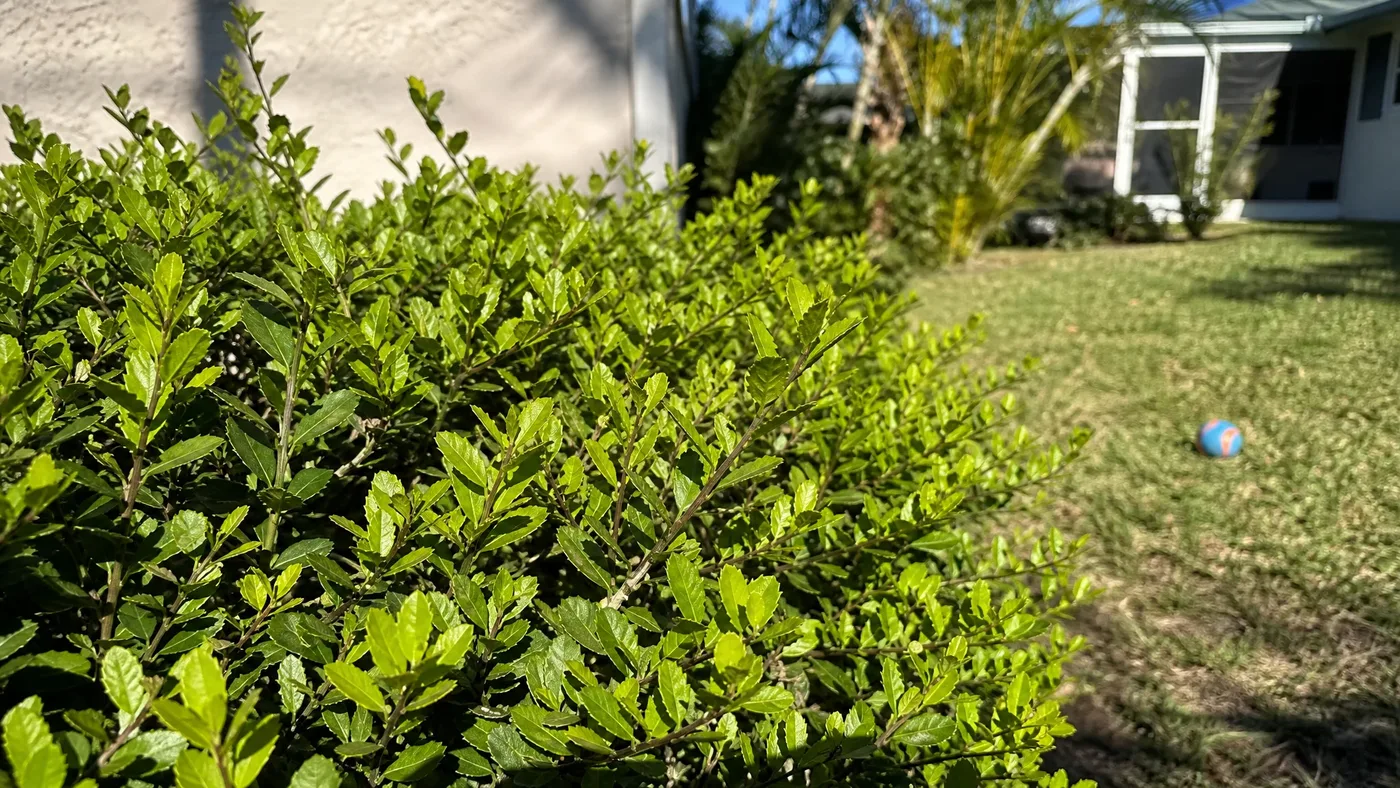
Soft Touch is an evergreen. It is a dense, mounded shrub with soft-textured, glossy green leaves and a silver mid-vein. Nothing drops in fall, so every leaf you see in January has already lived through at least one summer. The plant does not reset its color the way a deciduous shrub does. It adds a new layer each spring and carries the old ones forward.
The cultivar is small. It tops out at 2 to 3 feet tall and 2 to 3 feet wide, with a moderate growth rate. Compact growth means the new tips sit close to the older leaves, so the contrast is easy to see. On a species shrub that reaches 5 to 10 feet, the same flush hides inside a much larger canopy.
Where New Color Comes From
Growth happens at the tips. Buds open in spring, shoots extend, and the leaves on them start thin, soft and pale. As they mature they thicken and gain the glossy finish. Color follows leaf age, not the calendar date alone, which is why a plant sheared late can show a second pale flush after the first has darkened.
Top and Underside Differ
Turn a leaf over before you worry. On the species, the leaves are shiny and dark green on the upper surface and dull light green beneath. Soft Touch follows that pattern. A pale underside is a feature of the leaf, not a sign of iron or water stress.
Berries Add Their Own Color
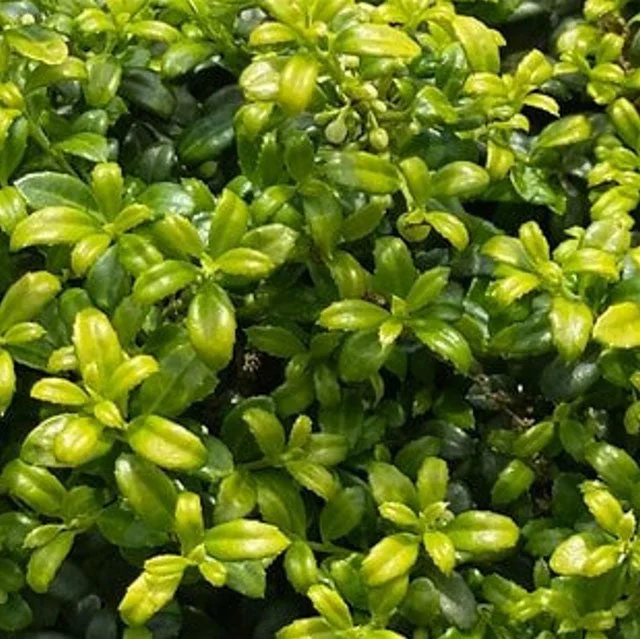
Pollinated females carry black berries that persist through winter. They sit against the foliage and can make the leaves look greener or duskier than they are. If you see black dots among the leaves, those are fruit, not a pest.
The Light Green Spring Flush
A photo arrives in May. The tips of every branch are a fresh, pale green, and the lower leaves are deep and glossy. The question is always the same: is it short of something? In almost every case, no. The plant is in the middle of its annual flush.
New growth on Soft Touch emerges noticeably lighter than mature foliage. The leaves are young, soft and still expanding. Over the following weeks they darken and blend into the older layer. Expect the contrast to be strongest right when the shoots open and to fade as the leaves mature.
This is not unique to Soft Touch. Other Japanese hollies show a spring color change too. Oregon State notes that 'Lemon Gem' has yellow new leaves in spring that turn lime green in summer. Soft Touch's shift is far milder, light green to dark green, but it follows the same logic. Young leaves in this species do not start out at their final color.
What Normal Looks Like
One of the most common questions we get is whether a pale flush means the plant needs feeding. It does not. A normal flush has three features:
- It is confined to the newest shoots at the branch tips, while leaves farther back stay dark green.
- The new leaves are uniformly light green, with no spots, mottling or dark veins.
- The color deepens steadily over the following weeks and does not stall or reverse.
If all three hold, leave the plant alone. Feeding to chase the color change will not speed it up, and a heavy dose can do harm. Our fertilizing guide covers when and how much.
Pruning and the Flush
Shearing in the middle of the flush removes the pale tips and the buds behind them, and the plant answers with another round of light growth. That second flush can look like a new problem. If you want to shape the mound, wait until the first flush has darkened, then trim lightly so the plant keeps its dense, rounded outline.
Why Soft Touch Japanese Holly Takes a Winter Tint
In a cold January, walk past a row of Soft Touch and you may notice that some plants have lost their summer shine. The foliage reads as dull, with a bronze or purple cast, especially on the side facing the weather. Others in the same row stay green. This is the winter tint, and it is cosmetic.
The published evidence on it is thin, so we will be plain. The cultivar's leaves are glossy green and the species' leaves are dark green, and nothing about either points to a tint. Treat what follows as field observation rather than published data. Some plants take on a purple-bronze cast in cold winters and some do not.
The tint belongs to cold weather and to evergreen leaves that stay exposed all winter. It shows on the leaves, not on the stems, and it spreads over whole sections of foliage rather than appearing in patches. That broad, even pattern is the main clue that it is a seasonal color shift and not damage.
What Makes It More Likely
Three things push a plant toward a stronger tint. Cold winters are the first. Open, windy sites are the second, since the species should be planted in protected areas to prevent damage from winter's cold winds. Full sun is the third, and that is the light Soft Touch calls for. You will not fix the tint by moving a healthy plant. Individual plants also differ, even in one block, so a neighbor staying green does not mean yours is sick.
What Happens Next
Judge the plant again after the spring flush. A tinted plant that pushes clean, light green growth and darkens through early summer was fine all along. A plant that stays dull and drops leaves is a different story, and that belongs in the next section.
Telling Tint From Trouble in Soft Touch Japanese Holly
A tint looks wrong because it is unexpected, not because it is harmful. Real trouble differs in where it sits on the plant, how it spreads and what the leaf does next. Leaf drop, leaf scorch and chlorosis (yellowing in high pH soils) are the cultivar's known problems. The table sets those against the two normal changes.
| Color change | Where it shows | When | Verdict |
|---|---|---|---|
| Light green flush | Newest shoots only | Spring | Normal |
| Bronze-purple tint | Whole leaves, broad and even | Cold winter | Normal, cosmetic |
| Chlorosis | Yellow leaves that stay yellow | Growing season | Check soil pH |
| Leaf scorch | Tan or brown edges and tips, often on the exposed side | Winter wind, hot spells | Damage |
| Leaf drop | Leaves falling, not just changing | Any time | Look at roots and water |
Two rows deserve a closer look. Chlorosis is the one most often confused with the spring flush, because both can show at the tips. The difference is that a flush is a soft green and deepens. Chlorosis is a true yellow that stays and spreads. For the species, alkaline soils will cause the leaves to yellow, and the cultivar's yellowing is tied to high pH soils as well.
When Drop Points Below Ground
Leaf drop with a dull, tired look is not a color change. It points to the roots. Clemson notes that root rot diseases are a problem with several Japanese cultivars. A wet, heavy site is the usual setup, so check drainage before you reach for any spray. Our problems guide covers the fixes in detail.
What to Do and What to Leave Alone
Picture a hedge in February with half its leaves gone bronze and an owner reaching for the pruners. The best move is to put them down. A plant that is only changing color needs very little from you, and in our rows the right response to a pale flush or a winter tint is to keep the normal routine and watch.
- Note which leaves are changing. Tips only in spring means a flush. Whole sections in a cold winter means a tint. Anything else, compare it to the table above.
- Do not prune off tinted foliage. It is alive and doing its job, and cutting it leaves bare spots that take a season to fill.
- Do not feed in winter to correct a tint. Fertilizer will not remove it, and late feeding is poor timing for a plant that is slowing down.
- Keep watering steady through dry spells and until the ground freezes. Our watering guide sets the rhythm.
- If yellowing persists, test the soil. The cultivar grows in acid soil (below pH 6.0) as well as neutral, but a high reading still explains yellow leaves on a holly. Your local extension service can advise on amending.
Cold-Climate Placement
If winter tint bothers you, the real lever is placement. A spot shielded from the harshest wind keeps the foliage in better shape and cuts scorch, which is the damaging cousin of the tint. We cover wrapping, mulch and timing in winter care for Soft Touch.
Patience Is Part of the Care
Most color worries resolve themselves within a season. A flush darkens in weeks. A tint fades with the next round of growth. The plants that need action are the ones whose color change comes with decline: leaves falling, branches thinning or stems browning.
Soft Touch Japanese Holly Color Follows the Calendar
Soft Touch changes color on a schedule. New growth comes in lighter green than the mature leaves and darkens within weeks. In cold winters, some plants take a bronze-purple cast that is cosmetic and fades from view once the next flush arrives. Neither needs treatment, and neither should send you to the fertilizer bag or the pruners.
Act on yellow that stays and spreads, scorched edges on the exposed side, and leaf drop. Those point to soil pH, wind or roots, and each has a fix.
Soft Touch Japanese Holly
Nursery-grown Soft Touch Japanese Holly in sizes from 1 Gallon Shrub, shipped to your door.
From $80.55
Shop Now →Our Soft Touch hollies live their whole lives in the full sun of our own farms, and our growers see the pale spring flush darken and the winter tint come and go in those same rows. Every plant we ship comes from our own rows, a top-quality shrub we would put in our own yard. Once you know what the color changes mean, our shop has Soft Touch hollies for your own beds.