Soft Touch Holly vs Inkberry (Gem Box): Which Should You Plant?
Walk a wet ditch in late summer and you can hear wind moving through a stand of inkberry. It is a low rattle of glossy leaves from plants that look like they have always been there. You might expect a shrub that tough to behave politely in a garden bed. Often it doesn't, and that thicket tells us most of what we need to know about the garden selection Gem Box.
Soft Touch Japanese holly comes from a different tradition: a clipped, clumping, boxwood-like mound that stays where you put it. This guide covers everything you need to know about choosing between the two, from a shaded side bed and a windy corner to soggy ground, hot pots, bed edges and formal hedges. Along the way we say plainly which one we would plant.
A Narrow Side Bed Beside the Fence
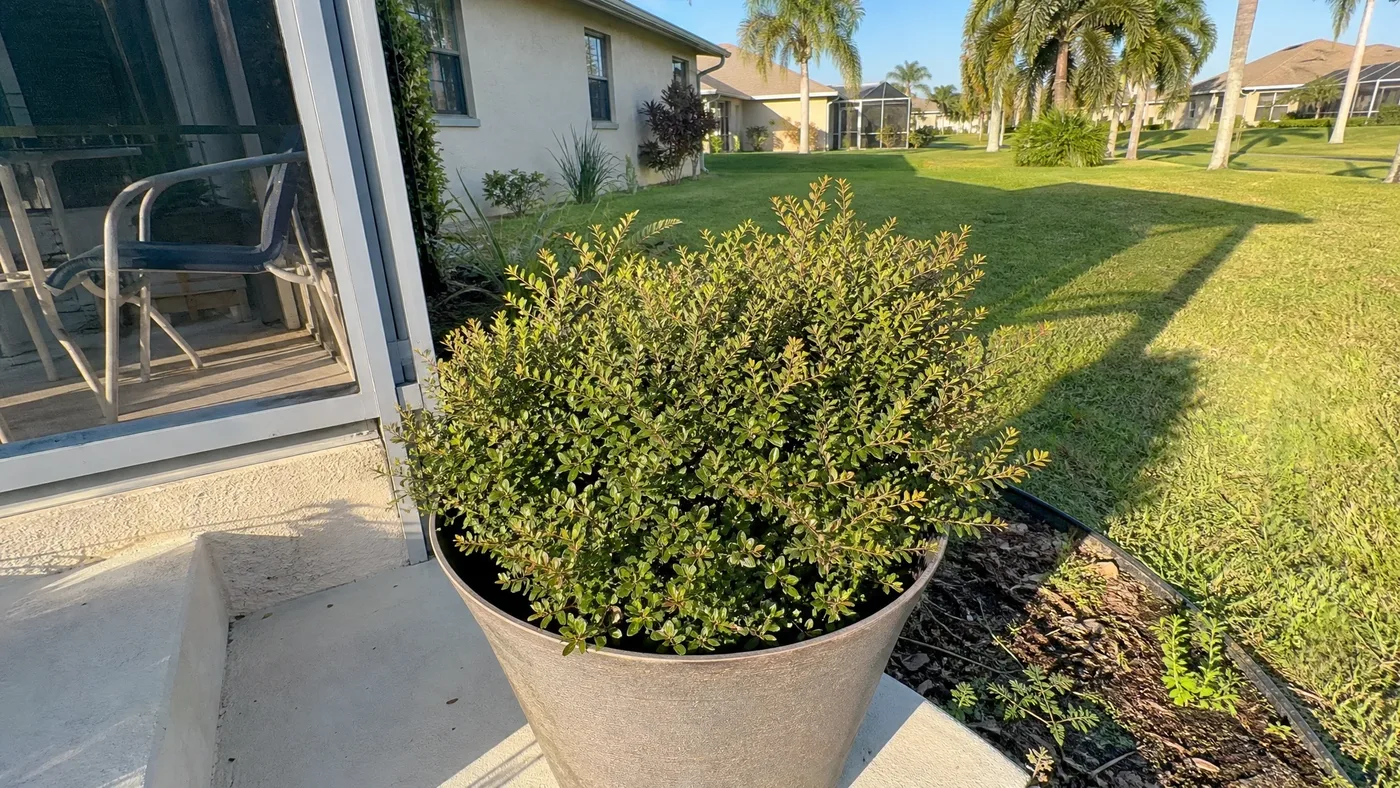
A strip a few feet wide between a fence and a walk is where size matters most. NC State lists Soft Touch at 2–3 feet tall and 2–3 feet wide, and it holds that size. You can plant it a foot or so off the fence and never prune it back from the walk. Our size guide goes deeper on that.
Inkberry is the opposite kind of plant. The species is described as rounded to broad spreading, and Gem Box is a compact selection of it, not a different animal. It will usually be happy in the strip, but expect it to lean and widen over time, and to need a trim to stay off the path.
Leaf Texture Against a Fence
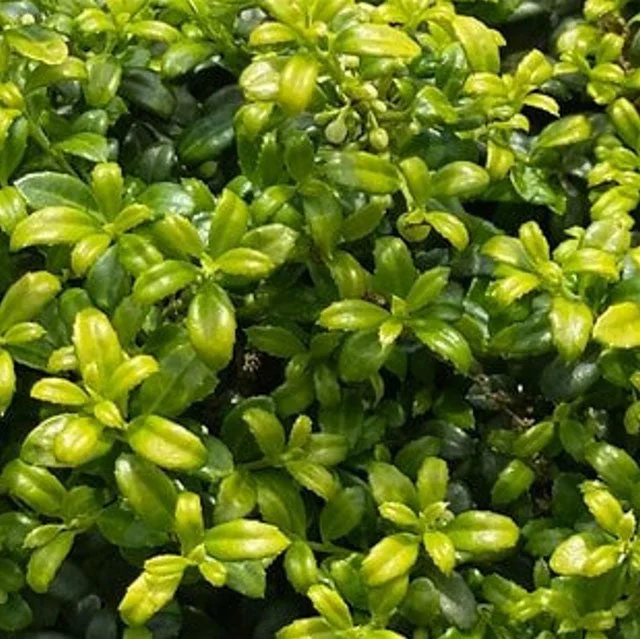
Against a flat wall of boards, texture is what you notice. Japanese holly leaves are small and tightly packed, ½ to 1¼ inches long and crowded on the stems in the species. The result is a fine, even surface that looks clipped even when it is not. Inkberry leaves are larger and glossier, so the shrub reads as looser and more naturalistic.
If your fence is dark, the glossy leaves of Gem Box show up well against it. If the fence is pale or busy, the finer texture of Soft Touch calms it down.
The Shade Question
Here we have to be candid. The cultivar page lists full sun, and part shade is confirmed only for the species. In a strip that gets sun for most of the day, Soft Touch fills in tight. In a strip that stays dim, we would lean to Gem Box, because inkberry is a woodland-edge plant. Our shade guide covers what Soft Touch does when pushed.
Soil is the other thing to read in a side bed. Soil beside a foundation or a concrete walk can turn limey, and NC State notes that alkaline soils cause Japanese holly leaves to yellow. If new growth comes in pale with green veins, test the soil before you reach for fertilizer.
Soft Touch Japanese Holly on a Windy Corner Lot
Corner lots get wind from two directions, and winter wind dries evergreen leaves faster than roots can resupply them. What matters is how a shrub is built, and the two are built very differently.
The species is described as dense, multi-stemmed, rigid and compact with a rounded habit, and Soft Touch follows that pattern at a much smaller scale. A low mound of stiff stems has little surface for wind to grab. Small leaves lose less water each, and the shrub sits below most of the airflow.
Inkberry is taller and more open. It is a plant of wet edges where wind is routine, and its stems flex rather than snap. That flexibility is useful. The tradeoff is that a windy exposure can leave a tall inkberry looking ragged, with bare lower stems showing through.
What Lives in Each
Wildlife is where the two part ways. A thicket of inkberry gives cover at several heights, and small birds use dense native evergreens like it for shelter, especially in winter. Soft Touch offers a smaller version of the same thing: tight, twiggy cover close to the ground. It is useful to small birds, but it will not match a stand of a native shrub.
The spring flowers on Japanese holly are described as dull, greenish-white and fragrant. They are quiet, not showy, so do not plant it as a pollinator magnet.
For a windy corner where wildlife matters to you, Gem Box in a group is the more generous choice. For neat, wind-proof edging at the base of taller plants, we would plant Soft Touch.
The Soggy Corner Where Water Lingers
This is the one case where we hand the win to inkberry without argument. Inkberry grows wild in wet ground, and the Illinois extension shrub selector lists it as tolerant of wet sites. Its roots are adapted to soil that stays damp after rain.
Japanese hollies are not. The species prefers moist but well-drained soil, and Clemson notes that root rot diseases are a problem with several Japanese cultivars. When a customer calls about a Soft Touch that is dropping leaves and has dark, soft roots, the cause is almost always a low spot.
How to Tell If Your Spot Is Too Wet
Dig a hole about a foot deep after a heavy rain and look at it the next morning. If water still stands in it, the spot is too wet for Soft Touch. If it has drained, the soil is probably fine. Your local extension service can help with drainage questions specific to your area.
- Leaves that yellow and drop from the bottom of the shrub, with no sign of insects, point to wet roots.
- Pull back the mulch and check the root flare. A flare buried under soil stays wet and invites rot.
- Dark, soft roots that smell sour mean the damage is already done, and replanting on higher ground is the cure.
When Gem Box Is the Right Pick
Choose Gem Box when the ground stays damp, when the area is a rain garden edge or a downspout outlet, or when you want an evergreen near a low corner of the yard. Choose Soft Touch only if you can raise the planting on a mound or the soil truly drains. Planting a few inches high is cheaper than replacing a dead hedge.
Soft Touch Japanese Holly in a Pot on a Hot Deck
A pot on a sunny deck puts the opposite pressure on a shrub: heat, reflected light and a small volume of soil that dries quickly. Soft Touch suits this well because of its size. At 2–3 feet it fits a mid-size container without becoming root-bound in a year. Our container guide covers pot choice and soil.
Heat and Spider Mites
Heat brings spider mites. Virginia Tech says damage from spider mites in hot, dry locations can be serious, and a pot against a south-facing wall is exactly that. Watch for stippled, dull leaves, and rinse the foliage in the morning when you see it.
Watering and Root Room
Soft Touch has to be watered as a container plant, not as a landscape plant. Check the soil with a finger every day or two in summer. Keep it moist, never soaked, and make sure the pot drains freely, because the same root rot that follows a soggy bed follows a pot that sits in a saucer of water.
Use a light-colored or double-walled pot if the deck bakes. A dark pot in full afternoon sun heats the root zone well beyond the air temperature.
Gem Box in a pot is the reverse in some ways. As a wetland native, inkberry forgives a pot that stays moist, but it is a larger plant and will want a bigger container for long-term life. It tolerates a missed watering less gracefully than its wet-ground reputation suggests, so it is no shortcut for a neglected deck.
For a hot deck, we would plant Soft Touch. For a pot in part shade that you water often, Gem Box is a fair choice.
Where Inkberry Suckers and Soft Touch Japanese Holly Stays Put
Suckering is a native-range habit. In a wet ditch, a plant that sends up new stems from its roots can hold ground and rebuild after flooding. The Illinois shrub selector says inkberry tends to sucker and form colonies. That is the trait that makes a thicket.
In a bed, the same trait means stems pop up beyond the planting line. Selections like Gem Box are chosen for a tidier garden habit, but we would still plan for some spread and ask your supplier how a given plant behaves. Soft Touch is a dense, multi-stemmed clump that widens slowly and stays put, which is why it works against a lawn or walk with little edging.
This table sums up what each means for a bed edge.
| Edge situation | Soft Touch | Gem Box inkberry |
|---|---|---|
| Against a lawn | Clump stays inside the bed | Watch for stems in the grass |
| Along a walk | Needs only light shaping | May need edging each year |
| Naturalized border | Stays tidy but plain | Fills gaps on its own |
| Beside a foundation | Stays put | Needs occasional removal of suckers |
Suckering is not a flaw. If you want the plant to knit together into a low evergreen mass, it is a gift. If you want it to stay in a defined shape, it is a chore. Decide which before you buy.
A Formal Hedge Along the Front Walk
A clipped hedge is where uniformity pays off. Soft Touch has small leaves, tight branching and a moderate growth rate, so a row of plants fills to the same height and width and a clipped line stays crisp. Our spacing guide covers how far apart to set them.
Inkberry can be clipped, too, but a row of Gem Box tends to fill unevenly. Some plants sucker and thicken while neighbors stay thin, so you tidy in more than one place. Larger leaves also leave a clipped edge looking less fine than small ones.
Keeping the Line Crisp
Whichever you pick, the routine is simple:
- Set the plants evenly in a straight line, using string, and match the root-ball height to the soil.
- Water through the first season so the row establishes at the same pace.
- Clip lightly during the growing season and avoid cutting into bare wood.
- Remove stray suckers from inkberry as soon as you see them, so they do not turn into a ragged edge.
One of the most common questions we get is whether Soft Touch is too slow for a hedge. Slower than a shrub you would shear twice a summer, yes, but the dense mound keeps its shape between clippings, and that is what a formal hedge needs. For a front walk, we would choose Soft Touch. Boxwood is the other classic option, and our boxwood comparison covers that choice.
Soft Touch Japanese Holly or Gem Box: Matching Plant to Yard
Put the yard first and the plant second. A damp low corner, a rain garden edge or a downspout outlet belongs to Gem Box. A shaded strip, or any spot where you want a loose, wildlife-friendly mass, also leans Gem Box. A sunny narrow bed, a hot deck pot, a windy corner and a clipped front hedge belong to Soft Touch.
Many yards have both situations, and nothing says you have to pick one plant for the whole property. Use each where its native habits help you and not where they work against you. After the next good rain, walk the yard and look at where the water stands and where the soil dries out first. The wettest spots and the driest ones will make the choice for you.
Soft Touch Japanese Holly
Nursery-grown Soft Touch Japanese Holly in sizes from 1 Gallon Shrub, shipped to your door.
From $80.55
Shop Now →Every Soft Touch we ship is grown on our own farms, then potted and packed with care so it arrives ready to plant. We are a small business that grows and sells top-quality shrubs, and we would be glad to have you take a look when you are ready to plant.