Soft Touch Japanese Holly vs Boxwood: Which Is Better?
If you're choosing a low hedge or foundation planting, Soft Touch Japanese Holly and boxwood probably top your list. Both are fine-textured evergreens prized for their dense, compact growth and year-round appeal. But they behave differently in the garden, and one will likely suit your specific site better than the other. This guide walks through the real differences, so you can pick the right shrub for your needs.
Quick Comparison Table
| Attribute | Soft Touch Japanese Holly | Boxwood (Buxus sempervirens) |
|---|---|---|
| USDA Zones | 5-8 | 5-9 |
| Mature Height/Width | 2-3 ft tall, 3-4 ft wide | 3-6 ft (cultivar-dependent) |
| Growth Rate | Slow, 3-6 inches per year | Very slow, 2-4 inches per year |
| Best Light | Full sun to part shade | Partial to full shade |
| Water Needs | Consistent moisture, not drought tolerant | Moderate, more drought tolerant |
| Soil Preference | Acidic to slightly acidic (5.0-6.5 pH) | Neutral to slightly alkaline |
| Spacing for Hedge | 2.5-3 feet apart | 1-2 feet apart |
| Pruning Intensity | Light shearing, minimal maintenance | Moderate to heavy for formal shapes |
| Winter Hardiness | Hardy to zone 5, variable in zone 8 | Very hardy, consistent to zone 9 |
| Key Disease Risk | Root rot if waterlogged | Boxwood blight (fungal) |
Soft Touch Japanese Holly: Strengths and Limitations
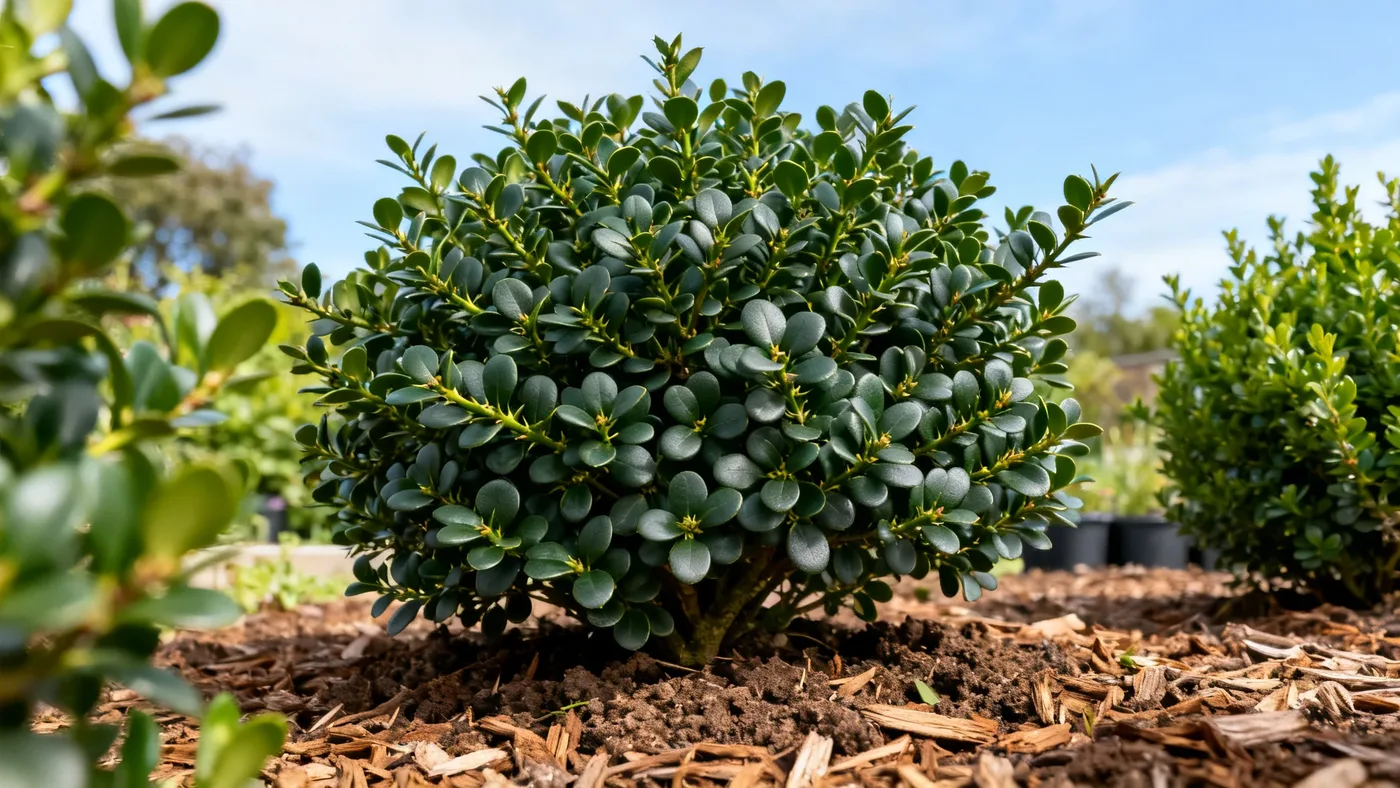
Soft Touch Holly is a cultivated selection of Ilex crenata, native to Japan, Korea, and eastern China. It was bred for one key trait: soft, non-spiny foliage. Unlike traditional hollies with sharp leaf edges, Soft Touch Holly offers a delicate, almost feathery appearance while keeping the dense mounding habit.
Pros of Soft Touch Japanese Holly
- Natural mounding form: Requires minimal pruning to maintain shape. Light shearing in late winter or early spring is enough; after the main flush in early summer, a light trim keeps it tidy. No formal topiary work needed.
- Softer texture: Safe to brush against without snagging skin or clothing. Families with young children or pets prefer this trait.
- Better in acidic soil: If your soil runs acidic (5.0-6.5 pH), Soft Touch thrives. Boxwood prefers neutral to slightly alkaline conditions, so amending acidic soil for boxwood may be unnecessary with Soft Touch.
- Moderate spacing for hedges: Plant 2.5-3 feet apart. This means fewer plants for a 50-foot hedge, reducing initial cost compared to boxwood.
- Deer resistance: Relatively deer-resistant compared to many broadleaf evergreens, so wildlife pressure is typically lower.
Cons of Soft Touch Japanese Holly
- Low drought tolerance: Needs consistent moisture and supplemental water during dry spells, especially in the first 1-2 years. If your site is hot, sandy, or naturally dry, this is a real drawback.
- Zone limit: Reliable only to zone 5. In zone 8, performance depends heavily on siting and heat/humidity. Boxwood performs better in zone 8 and extends to zone 9.
- Part shade in hot climates: Best foliage density comes in part shade when summers are hot. Full sun in southern regions can stress the plant and thin the canopy.
- Root rot risk: Overwatering or poor drainage leads to root rot. If your soil drains poorly or you tend to over-irrigate, boxwood's higher drainage tolerance is an advantage.
- Slower size achievement: At 3-6 inches per year, it takes roughly 3-5 years to reach mature mounded size. Hedges fill in slowly.
Boxwood: Strengths and Limitations
Boxwood (commonly Buxus sempervirens, European boxwood) has been a landscape standard for centuries. It tolerates shade, can be sheared into formal shapes, and establishes slowly but reliably. It's the gold standard for topiary and formal gardens.
Pros of Boxwood
- Superior shade tolerance: Boxwood thrives in partial to full shade, making it the choice for north-facing foundations or under mature trees. Soft Touch needs more light to maintain density.
- Better drought tolerance (established): Once established, boxwood tolerates dry spells better than Soft Touch Holly. If irrigation is limited on your property, boxwood is more forgiving.
- Formal shaping: Takes pruning into geometric forms beautifully. If you want knot gardens, spiral topiaries, or crisp hedges, boxwood is the traditional choice.
- Extended hardiness: Reliable to zone 9 and consistent across zones 5-8. Zone 8 gardeners can count on boxwood; Soft Touch performance there varies.
- Neutral to alkaline soil tolerance: Performs well in neutral and slightly alkaline soils where many acid-loving shrubs struggle.
- Wider cultivar range: Hundreds of boxwood cultivars offer varied sizes, from 1-foot dwarfs to 6-foot columns.
Cons of Boxwood
- Boxwood blight risk: A fungal disease (Calonectria pseudonaviculata) affects boxwoods in wet, warm conditions. Once established in a region, it spreads to nearby plantings. Soft Touch Holly does not have this disease pressure.
- Requires closer spacing: Typical spacing is 1-2 feet apart for a dense hedge. A 50-foot hedge needs roughly 30-50 plants versus 17-20 Soft Touch plants, raising material costs.
- Heavier pruning for maintenance: To stay formal and dense, boxwood often needs multiple pruning passes per season. Soft Touch needs only light shearing.
- Slower than Soft Touch: Growth rate is 2-4 inches per year. Patience is required for full size.
- Spiny foliage (some cultivars): Traditional boxwood leaves are slightly waxy and can catch on skin or clothing. Not ideal if children play nearby.
- Higher material cost: Boxwood plants are often more expensive at nurseries, and you need more of them per linear foot.
Side-by-Side: Common Use Cases
Low Hedging (Under 3 Feet)
Winner: Soft Touch Japanese Holly. Its natural mounding form reaches 2-3 feet tall and 3-4 feet wide without aggressive pruning. Space plants 2.5-3 feet apart, and you'll have a full hedge in 4-5 years with minimal effort. Boxwood also works here, but boxwood blight is a real concern if the disease is present in your region, and you'll need tighter spacing and more pruning to maintain form.
Formal Topiary and Geometric Shapes
Winner: Boxwood. Boxwood has centuries of topiary tradition behind it. Its dense structure holds intricate shapes reliably. Soft Touch, while shapeable, lacks the compact density that makes boxwood ideal for sculpted forms.
Shade Planting (North Side of House or Under Trees)
Winner: Boxwood. Boxwood genuinely prefers partial shade and maintains good density there. Soft Touch needs more light; in heavy shade, its canopy thins. If your foundation planting site gets fewer than 4 hours of direct sun, choose boxwood.
Acidic Soil Without Soil Amendment
Winner: Soft Touch Japanese Holly. If your soil naturally runs acidic (5.0-6.5 pH), Soft Touch thrives with no amendment. Boxwood prefers neutral to slightly alkaline conditions. You could amend acidic soil for boxwood, but that adds cost and ongoing maintenance.
Drought-Prone or Dry Sites
Winner: Boxwood. Established boxwood tolerates dry spells significantly better than Soft Touch. In regions with irregular rainfall or sandy, fast-draining soil, boxwood requires less supplemental irrigation.
Hot Zone 8 Garden
Winner: Boxwood or choose Soft Touch with careful siting. Boxwood extends reliably to zone 8. Soft Touch performs variably in zone 8; check your local extension service for cultivar recommendations specific to your microclimate. If zone 8 heat and humidity are intense, boxwood is the safer bet.
Low-Maintenance Landscape
Winner: Soft Touch Japanese Holly. Soft Touch requires light shearing once or twice a year; boxwood often needs three or more pruning sessions to stay formal and dense. If you prefer to plant and enjoy rather than maintain, Soft Touch is less labor-intensive.
Disease and Pest Considerations
Boxwood blight has become a serious concern in many regions. This fungal disease thrives in wet, warm conditions and spreads through pruning tools and wet foliage. Once present in your area, it can devastate boxwood plantings. Check with your local extension office to learn if boxwood blight has been documented near you before committing to large boxwood plantings.
Soft Touch Japanese Holly faces different pests: scale insects, spider mites, and leaf miners can appear, though they are less common than boxwood blight. Root rot is the primary disease risk, driven by overwatering or poor drainage rather than a mobile fungal pathogen. In well-draining soil with appropriate watering, Soft Touch avoids most disease pressure.
Cost Comparison
Initial plant cost varies by region and nursery, but boxwood typically costs more per plant. Additionally, a 50-foot hedge requires roughly 25-30 boxwood plants spaced 1.5-2 feet apart versus 17-20 Soft Touch plants at 2.5-3 foot spacing. Over time, the lower pruning demand for Soft Touch also saves labor cost. If budget is a factor, Soft Touch typically costs less to establish and maintain.
The Verdict: Which Should You Choose?
Neither plant is universally better. Your choice depends on your specific conditions and goals.
Choose Soft Touch Japanese Holly if: You want a low, naturally mounding hedge with minimal pruning; your soil is acidic; you have zone 5-7 hardiness; you prefer lower maintenance; or you garden in a wet region where boxwood blight is documented. The Soft Touch Japanese Holly care guide covers establishment and year-round care in detail. Also review which zones Soft Touch Holly grows in to confirm your location is a good fit.
Choose Boxwood if: You need deep shade tolerance; you garden in zone 8-9 where Soft Touch performance is uncertain; your site is naturally dry or you have limited irrigation; you live in an area without boxwood blight; or you want to create formal, sculpted shapes. Boxwood shines in classic landscapes and topiary work.
The middle ground: In zones 5-7 with acidic soil and moderate shade, either plant works. Consider your water availability, pruning tolerance, and aesthetic preference. Both will deliver years of reliable service in the right spot.
Quick Reference Checklist
| Decision Factor | Favors Soft Touch | Favors Boxwood |
|---|---|---|
| Zone 5-7 gardener | ✓ | ✓ |
| Zone 8 gardener | ✓ | |
| Acidic soil (5.0-6.5 pH) | ✓ | |
| Neutral to alkaline soil | ✓ | |
| Deep shade planting | ✓ | |
| Part sun to full sun | ✓ | ✓ |
| Dry site, limited water | ✓ | |
| Consistently moist, well-drained | ✓ | ✓ |
| Formal topiary goal | ✓ | |
| Natural mounding hedge | ✓ | |
| Low pruning maintenance | ✓ | |
| Boxwood blight in your region | ✓ | |
| Budget-conscious | ✓ |