Soft Touch Japanese Holly Root System: Depth and Spread
The number to start with is 2–3 feet, the mature height and width of Soft Touch. Its roots stay close to that footprint, which is why this holly can sit near a walk or foundation where a 5–10 foot Japanese holly would cause trouble.
Get the root question wrong and you either waste a good spot by planting too far back, or you crowd a shrub against concrete where it dries out and struggles. Get it right and a small evergreen mound holds its place for years without lifting pavers or fighting its neighbors.
We'll walk you through what lies under a yard and where Soft Touch roots fit into it, then the safe distances from walks, walls and foundations, and finally how to read and fix the root ball at planting.
Your Whole Yard Sits Over Roots
Picture your yard from above: a walkway, the house foundation, and a row of shrubs in the bed between them. Under all of it is one continuous layer of soil, and every plant in that bed shares the layer with concrete, footings and whatever else is buried there. Roots do not respect the edge of a bed. They follow air, water and loose soil, and they stop where the ground turns hard.
What Sits Beneath Walks and Walls
Pavement and foundations rest on compacted ground, and that compaction does much of the work of keeping roots out. Fine roots have a hard time pushing through packed base material. Trouble starts at gaps: a crack in a walk, a seam beside a wall, a spot where runoff collects. A root that finds one of those can thicken, and a thick root is what lifts pavers.
Why Plant Size Predicts Root Reach
Our rough rule is that a shrub's roots reach about as far as its canopy, and sometimes well past it on vigorous plants. That makes size your first diagnostic question. The species grows 5–10 feet tall and 5–8 feet wide, while Soft Touch stays at 2–3 feet in both directions. Same species, very different footprint, so the worries you have about a big hedge shrub do not carry over.
Where Soft Touch Japanese Holly Roots Actually Go
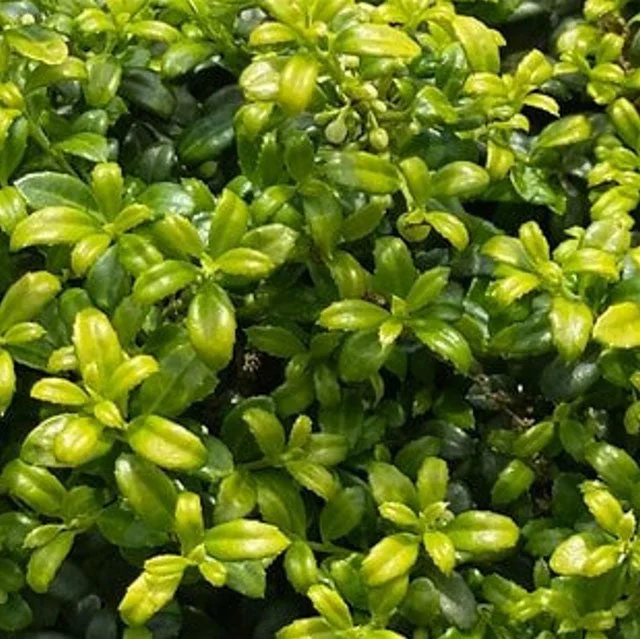
Here is what we can say with confidence. Soft Touch is a dense, mounded shrub that reaches 2–3 feet tall and 2–3 feet wide, and its root system is shallow, fibrous and non-aggressive, reaching only slightly past the edge of the canopy. We will not give you an inch figure for depth, because the sources we trust do not publish a measured one and soil changes the answer. Your local extension office can tell you what to expect in your ground.
The practical way to find out is to read what you see when you dig beside an established plant, or when you lift one. Match what you find to the list below.
- If you find a dense web of fine, pale roots in the top layer of soil and little else, that is normal for this plant and nothing to fix.
- If you hit thick, woody roots running through the bed, they almost certainly belong to a nearby tree or large shrub, because Soft Touch does not grow roots like that.
- If the roots are dark, soft and falling apart, suspect rot. Penn State Extension lists several Ilex crenata cultivars as very susceptible to black root rot, and wet soil makes it worse.
- If the roots look healthy but the leaves are yellow, test your soil pH before blaming the roots. Alkaline soil yellows Japanese holly leaves.
When you dig, work from the edge of the canopy inward and use a hand trowel, not a shovel. Fine roots lie close to the surface, and a shovel cuts what you came to examine. Fill the hole back in the same day and water it, so you do not leave the mat exposed to air.
So when a walk has heaved beside a Soft Touch, look at the trees first.
Fibrous Mat, Not Taproot, in Soft Touch Japanese Holly
A taproot drives one thick root straight down, which makes a plant hard to lift and hard to move. Soft Touch does the opposite. It builds a shallow mat of fine roots, so the plant comes up as a wide, flat disk of soil and roots rather than a deep plug. That shape explains how it behaves when you move it, when summer turns dry, and when wind pushes on it.
Lifting and Moving an Established Plant
To move a plant, dig wide and shallow. Cut a circle a little beyond the canopy edge, slide the spade under the mat and lift the whole disk with the soil still on it. Replant the same day at the same depth. A narrow, deep hole slices through the fine roots that do the work, and those are the roots the plant needs most after a move.
Why the Mat Dries Out First
Shallow roots sit in the layer of soil that dries first. A bed along a south wall, under an eave or beside sun-baked pavement loses moisture quickly, and the mat has nowhere deeper to reach. Soft Touch tolerates drought, but that is no reason to ignore a new plant. Our watering guide covers the schedule. Soggy ground is the opposite problem, and Japanese hollies handle it badly.
How a Low Mound Stays Anchored
A 2–3 foot mound catches little wind, so the mat holds it without stakes in ordinary conditions. We often see customers stake a freshly planted Soft Touch, and it rarely needs it. What loosens a plant is a ball set too high on a slope or soil washed off the roots, so firm the backfill and set the plant at grade.
Distance Rules for Walks, Walls, and Foundations
Use the shrub's own width as your measuring stick. At 3 feet wide, Soft Touch needs about 18 inches from its center to the edge of anything solid if you want the whole mound to stay off the surface. That number protects the canopy, and since the roots reach only slightly past the canopy, it keeps them clear of hard surfaces too.
Measure from the center of the plant, not from the edge of the pot. The distances below come from the mature width, not from root data.
| Structure | Center of plant | Reason |
|---|---|---|
| Walkway or path | 18 inches from the edge | Keeps a full 3-foot mound off the paving. |
| Patio edge | 18 inches from the edge | Same logic, with room to sweep leaves. |
| House foundation | 18 inches or more | Leaves air movement and room to reach behind the plant. |
| Retaining wall | 18 inches or more | Keeps wall drainage from pooling around the root ball. |
If the Site Is Tighter
If your bed is narrower than that, measure again before you give up. A plant kept toward the 2-foot end of the size range needs only about 12 inches. If the gap is still short, you have three choices: shift the bed, grow the plant in a container (see our container guide), or install a root barrier between the plant and the structure. For foundations, ask your local building office about footing depth before you dig.
Soft Touch Japanese Holly Beside Other Shrubs
Soft Touch is non-aggressive and moderate in growth, so in a contest for water it loses to faster neighbors. It will not shove other roots aside the way a vigorous hedge shrub does, so damage here usually runs one way. A larger compact cousin, 'Helleri', is rated by UF/IFAS as having roots that are usually not a problem. That cultivar is bigger than Soft Touch, so treat the comparison as a guide only.
Spacing Between Neighbors
For a row of Soft Touch, our spacing guide for hedges and borders gives the center-to-center distances. Beside a different shrub, add half of that shrub's mature width to half of Soft Touch's, which is about 1–1.5 feet. That puts the two canopies just touching, and the roots will share ground without fighting over it.
Spotting and Fixing Crowding
Crowding shows first on the side facing the neighbor: thin growth, a lean toward the light, or soil that stays dry even after you water. In our rows, the Soft Touch that struggle are the ones with a fast neighbor at their shoulder. If you see this, cut the neighbor back, water the holly more deeply, and check the pH before you conclude roots are the cause. If the neighbor is a tree, lift the holly and move it out beyond the tree's canopy.
Reading the Root Ball at Planting Time
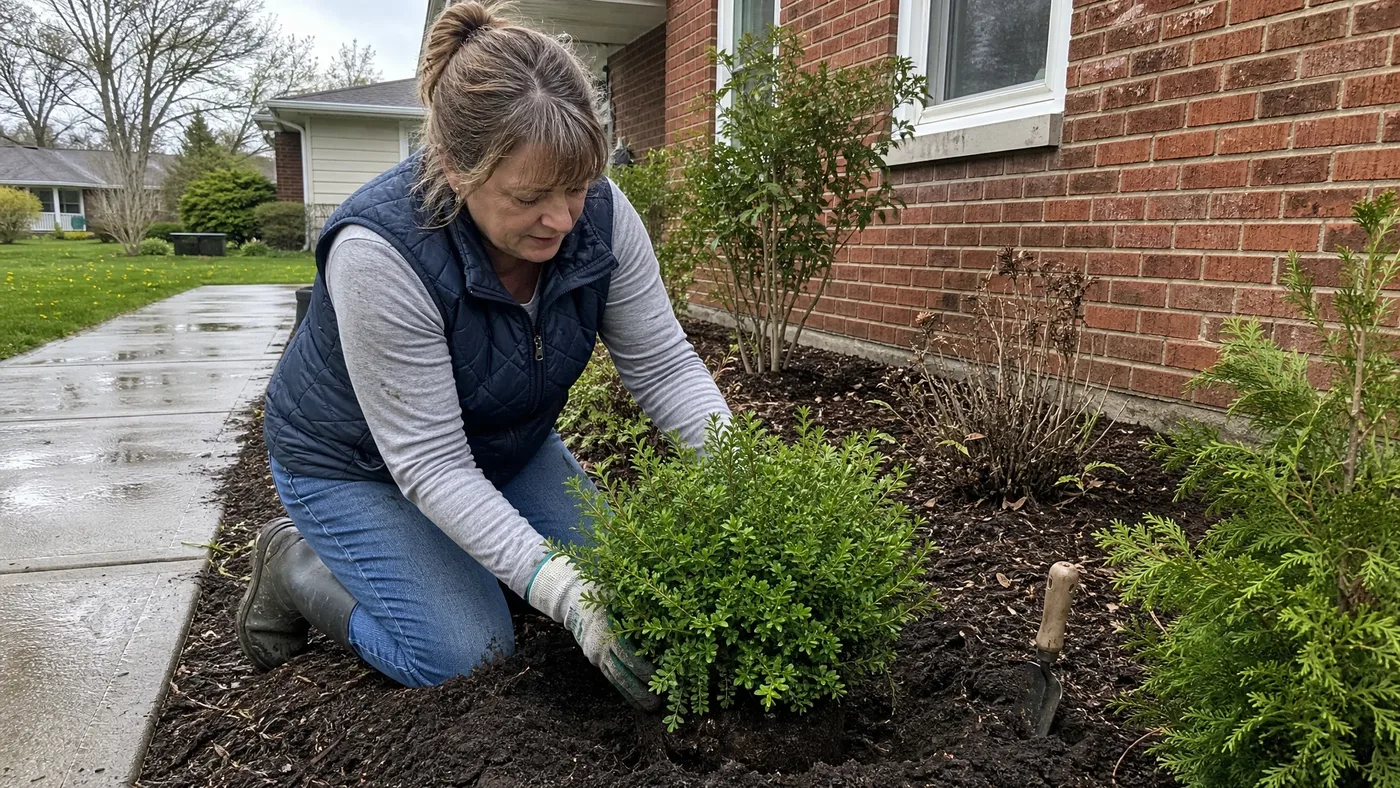
Roots tell you more at planting than they ever will again. Slide the plant out of its pot and look at the sides and bottom of the ball. A healthy Soft Touch ball shows many fine, pale roots holding the soil together, and it should stay mostly in one piece when you set it down. Roots wound in tight circles are the thing to correct now, because they can keep circling once planted.
Work through these steps in order.
- Lay the plant on its side and slide the pot off. Never haul it out by the stems.
- Look for roots running around the outside of the ball. If you see a few, tease them loose with your fingers.
- If the roots form a solid mat or a tight spiral, make several shallow vertical cuts down the sides and loosen the base before planting.
- Find the topmost root and set it at the soil surface. Clemson Extension lists planting too deeply among the things that favor root disease in Japanese hollies.
- Backfill with your native soil, water it in, and keep mulch off the stems. Where drainage is poor, plant in a raised bed.
If the ball is dry and hard when you pull it out, soak it in a bucket until the bubbles stop before you plant. Dry root balls shed water, and a shallow mat in a dry ball cannot take up moisture from the surrounding bed.
Our planting guide covers the rest of the process. If you order from us, run the same check the day the plant arrives and tell us if anything looks off.
Planting Soft Touch Japanese Holly Beside Pavement Without Worry
The root facts turn into a short list of decisions. Soft Touch has no taproot and no aggressive spread, so heaving pavement is not a realistic risk at the right distance. It also suits planting along walkways. The real hazards beside hardscape are dryness from reflected heat, runoff that pools, and crowding from neighbors, and all three are easy to plan for.
Before you plant, check the bed beside the pavement. Does water stand there after rain? If so, build it up or pick another spot. Does the wall or walk throw heat onto the bed? Plan to water the shallow mat more often in the first seasons. For ideas on pairing it with other plants in a tight bed, see our landscape ideas.
Finally, keep mulch thin and away from the stems. A shallow root mat likes a light cover that slows evaporation, but Clemson lists excess mulch at the base among the conditions that favor root disease, so a ring of mulch piled against the trunk does more harm than good.
Measure From the Walk Before You Plant
Soft Touch keeps a shallow, fibrous root mat that reaches only slightly past a 2–3 foot canopy. That makes it one of the safer shrubs to set near hardscape. Its weak points are dry soil, wet feet and fast neighbors, not damage to concrete.
The rule is simple. Measure from the edge of the walk or wall to where the center of the plant will sit. If you have about 18 inches, plant. If the gap is short, choose a different spot or install a root barrier.
Soft Touch Japanese Holly
Nursery-grown Soft Touch Japanese Holly in sizes from 1 Gallon Shrub, shipped to your door.
From $80.55
Shop Now →On our farms, Soft Touch grows in open, sunny rows of well-drained acid ground, so the root balls we lift are the dense, fine mat you read about above. As a small grower-run business, we look for sound roots before anything else, because that is the plant that behaves beside your walk. Browse our shop when you want one.