Soft Touch Japanese Holly vs Dwarf Yaupon Holly: Which to Plant?
The tag read: "Dwarf Yaupon Holly. Tolerates any soil, drought and salt spray. Native." The customer holding it asked us, "Is all that true, and does it beat Soft Touch?" It's a fair question, because a tag is a claim, not a test.
Some of those claims hold up well. Some are true of the species and stretched over a small selection, and some are true but irrelevant to your yard. Below, you'll find out all about how the two shrubs compare on soil pH, drought and salt, native status and mature looks, including which one we would plant on which kind of site. Choose wrong and you get yellow leaves in the wrong dirt, or a "dwarf" that outgrows its bed.
Does Dwarf Yaupon Really Ignore Soil pH?
Mostly, yes. UF/IFAS lists yaupon holly's soil tolerances as clay, sand, loam, alkaline, acidic, and wet to well-drained. That rating belongs to the species, so treat it as strong evidence for the dwarf selection rather than a guarantee. Of the tag's claims, this one has the best support.
Soft Touch tells a different story. Japanese holly generally does poorly in alkaline soils, which cause the leaves to yellow, and Virginia Tech gives the species a pH range of 3.7 to 6.8. The Soft Touch page itself lists acid (below 6.0) and neutral (6.0 to 8.0) soils, which reads generously. We would not plant to the top of that range, because the species warning sits right beside it.
Reading Yellow Leaves Before You Blame pH
Pale new leaves with veins that stay green point toward high pH. Yellowing across the whole plant, or on older leaves first, points elsewhere: soggy soil, a failing root system, or hunger. Japanese hollies carry a real root rot risk, and Clemson's extension notes that root rot is a problem with several Japanese cultivars. Test the soil before you change your fertilizer or your watering.
A test also saves you from a common wrong turn. Adding fertilizer to a shrub that is yellow because of high pH feeds the problem without fixing it, since the plant cannot use what is in the ground. Diagnose first, then treat.
If Your Soil Tests Alkaline
If the test comes back alkaline and you want Soft Touch anyway, the work is real and ongoing. Our guide to the best soil for Soft Touch covers how to adjust it and when to choose another plant. For most people with alkaline dirt, choosing another plant is cheaper than amending the same bed year after year.
Verdict: the claim holds. In alkaline or untested soil, dwarf yaupon wins this round.
Drought and Salt Claims About Soft Touch Japanese Holly
The tag says yaupon shrugs off dry spells and salt spray, and here the evidence is good. UF/IFAS rates the species' drought tolerance as high and its aerosol salt tolerance as high. The 'Dwarf' selection goes further, since it is resistant to Phytophthora root rot, drought, salt spray, and deer browsing. Two universities point the same way, and one of them names the cultivar.
Dry Spells
NC State says established Soft Touch tolerates drought, but it gives no salt rating. Extension pages on Japanese holly describe a plant that likes moist, slightly acid, well-drained soil, and they flag spider mites as a problem in hot, dry sites. In practice that means an established Soft Touch handles dry spells, but a dry summer in a baked bed shows up as mite damage and thinning. Stippled, dusty-looking leaves are the first sign.
Our guide on whether Soft Touch is drought and heat tolerant goes through the details. The short version is that it needs a watering plan in its first seasons, while yaupon is rated to manage with far less. Even so, treat any drought rating as a statement about a shrub whose roots are already out in the soil, and water new plantings of either one.
Coastal Spray
"Aerosol" salt means spray carried in the air. It does not mean salty soil or storm flooding, which are separate problems, and the rating speaks only to the first. For a seaside yard, yaupon is the plant with evidence behind it.
One of the most common questions we get is whether Soft Touch can go near the ocean. We have found no extension rating that supports it there, so we don't recommend it. If salt spray reaches your windows, plant something rated for it.
Deer Pressure
Dwarf yaupon is also resistant to deer browsing. Soft Touch is only mildly resistant. Mild is not a promise, so where deer are heavy, yaupon has the stronger record.
Verdict: yaupon, clearly. If your yard is hot, dry or salty, plant it and don't look back.
What Native Status Actually Buys You
Yaupon is native to the eastern half of the United States. Japanese holly is a native of Japan and East Asia. The difference is real, and nurseries like to lead with it. The useful question is what it delivers in your yard.
What the Label Does Deliver
It buys you a plant adapted to the heat and soils of its home range, which helps explain why yaupon copes with lime, sand and salt. For a gardener who wants a native shrub in the ground, that counts for something, and we would not argue the point.
What the Label Does Not Deliver
It does not buy cold hardiness. Yaupon is rated for zones 7a through 9b, so native status does nothing for a gardener in zone 6. A species can be native across a wide region and still have selections that stop short of its northern edge.
It also doesn't pass automatically from the species to a dwarf selection. Species yaupon reaches 15 to 25 feet, while the dwarf is a chosen form that stays far smaller. The sources we use say nothing about wildlife value for that form, and we won't invent bird or pollinator claims.
If ecological value drives your decision, ask your local extension service which plants support wildlife in your area. Tag copy often treats "native" as a synonym for "better." In range it is a small point in yaupon's favor, and outside the range it counts for nothing.
Verdict: a modest win for yaupon, and only in zones 7 through 9.
How Soft Touch Japanese Holly Looks at Maturity
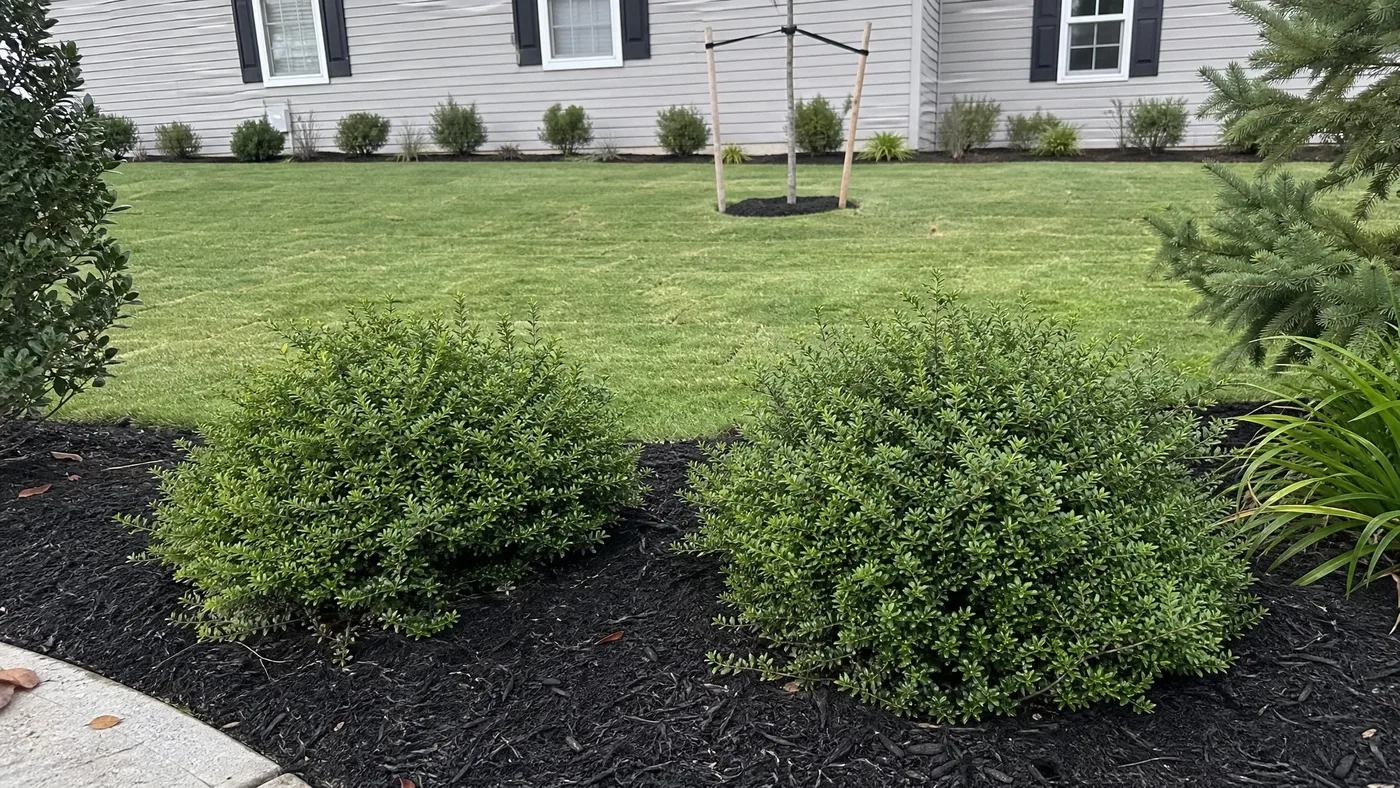
Size is where the two plants separate most. Soft Touch matures at 2 to 3 feet tall and wide, a dense, mounded evergreen with a moderate growth rate. 'Dwarf' yaupon rapidly grows 3 to 5 feet tall and 3 to 6 feet wide. The table lines up the numbers.
| Trait | Soft Touch | Dwarf yaupon |
|---|---|---|
| Mature height | 2–3 feet | 3–5 feet |
| Mature width | 2–3 feet | 3–6 feet |
| Growth rate | Moderate | Rapid |
| USDA zones | 5a–9b | 7a–9b |
Leaf, Texture and Form
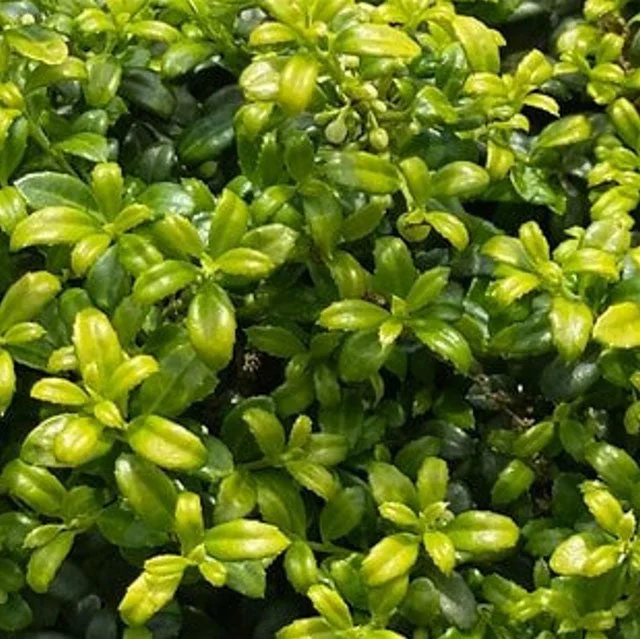
Leaf and texture are closer than the size gap suggests. Both are small-leaved evergreens, and Clemson's extension says Japanese hollies look more like a boxwood than a holly, which is why people use Soft Touch as a boxwood stand-in. Judge color and texture in person, because photos and tags flatten both. Soft Touch also flowers in spring, though the species blooms are dull greenish-white and easy to miss.
Keep the cultivar and the species apart in your head. The Japanese holly species runs 5 to 10 feet tall and 5 to 8 feet wide, so a photo of an older, unclipped Japanese holly tells you nothing about Soft Touch. The same goes for yaupon, where the species reaches 15 to 25 feet and only the dwarf stays in a landscape bed.
The Upkeep Gap
The practical difference is upkeep. A shrub that grows rapidly toward 5 feet by 6 feet will outgrow a 3-foot foundation bed unless you keep cutting it, while Soft Touch stops near where you planted it. Our article on how big Soft Touch really gets explains that slower, tidier habit.
Verdict: Soft Touch for tidy edges, low hedges and tight beds. Yaupon when you want a larger, faster mass.
Where the Evidence Favors Soft Touch Japanese Holly
Three of the tag's claims fail yaupon in particular situations, and in those situations Soft Touch holds up.
Cold Winters
Yaupon's listings start at zone 7a. Soft Touch grows in zones 5a through 9b and the species in 5a through 8b. UGA extension says Japanese hollies are better adapted to zones 5 to 6, and zones 8 and 9 may not suit the cultivar. In zone 5 or 6 the choice isn't close, because yaupon is not an option. See what zones Soft Touch grows in for the details.
The reverse also applies. In zones 8 and 9, the warm end of Soft Touch's range, we would lean toward yaupon, and the overlap in zone 7 is where soil and size should decide.
Small, Quiet Spaces
"Dwarf" on a yaupon tag still means up to 5 feet tall and 6 feet wide. If you want a shrub that stays at 2 to 3 feet with little cutting, Soft Touch is the one. Our guide on how and when to prune shows how light that work stays.
The Root Rot Caveat
The evidence cuts both ways here. Dwarf yaupon resists Phytophthora root rot, and Penn State lists several other Ilex crenata cultivars as very susceptible to black root rot. Soft Touch is not on that list, but we would never claim immunity. In heavy, wet soil, drainage matters more for Soft Touch than for yaupon.
A Verdict You Can Plant By
Here is how we would sort it, site by site. These are our calls from the evidence above, not guarantees for any one yard, and a soil test is the cheapest way to confirm the first line.
- Alkaline soil in zones 7 to 9: plant dwarf yaupon, since its soil tolerance covers both alkaline and acidic ground.
- Oceanfront or salt spray: plant dwarf yaupon, the only one of the two with a salt spray rating.
- Zones 5 and 6: plant Soft Touch, because yaupon is not rated for those winters.
- Small foundation bed or low formal edge: plant Soft Touch, which stays at 2 to 3 feet.
- Hot, dry bed with little irrigation: plant dwarf yaupon, which is rated for drought.
- Acidic, inland, zone 7: either works, so choose on size and pick Soft Touch for the smaller footprint.
Neither is the right answer everywhere. Yaupon is the tougher plant and Soft Touch is the neater one, and your site decides which of those matters.
Choosing Between Yaupon and Soft Touch Japanese Holly
Yaupon's tag claims survive on soil pH, drought and salt, with the best backing in the species ratings and a separate record for the dwarf itself. "Native" is a smaller win than it sounds and ends at zone 7. Soft Touch wins on cold hardiness, compact size and a moderate pace.
If your soil is alkaline or your yard gets salt spray, plant dwarf yaupon where it is hardy, and if your soil is acidic and your yard is inland, plant Soft Touch.
Soft Touch Japanese Holly
Nursery-grown Soft Touch Japanese Holly in sizes from 1 Gallon Shrub, shipped to your door.
From $80.55
Shop Now →Each Soft Touch we ship has grown in open sun and acidic soil on our farms, the setting that suits it best. Whichever holly fits your yard, our shrubs are raised by our own growers from start to finish. If Soft Touch won out over dwarf yaupon, our shop has plants waiting for you.