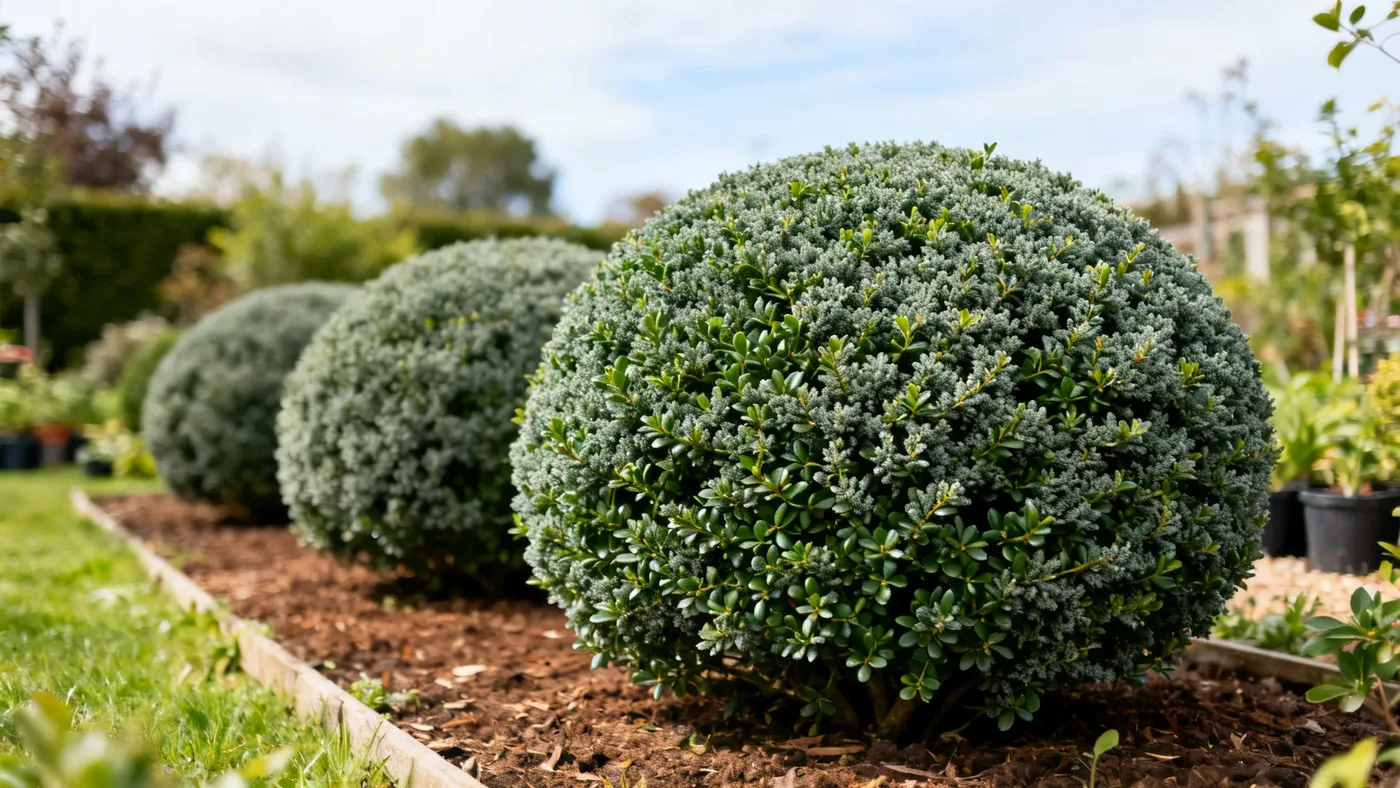
Is Soft Touch Japanese Holly Drought and Heat Tolerant?
The short answer: no. Soft Touch Japanese Holly is not a drought-tolerant plant, and it is not particularly heat-tolerant either. But before you cross it off your list for a warm or dry garden, read on. With the right site selection and maintenance practices, this fine-textured evergreen can thrive in zones 5 through 8, even in challenging microclimates. The key is understanding what it needs and setting it up to succeed.
What the Plant Facts Tell Us
Soft Touch Japanese Holly (Ilex crenata 'Soft Touch') has a drought tolerance rating of low to moderate. That means it needs consistent moisture year-round, especially during the first 1 to 2 years after planting. Once established, it can handle some dry periods better than a newly planted shrub, but it is not in the same category as true drought-tough plants like Russian sage or butterfly bush.
The water requirement is listed as "average, consistent moisture." That word "consistent" is the critical one. The plant does not bounce back quickly from dry soil. Prolonged heat combined with dry soil can cause leaf burn, wilting, and even branch dieback.
Heat tolerance is similarly modest. The plant thrives in zones 5 through 8, but performance in zone 8 varies with heat and humidity. In the hot, dry interior West, zone 8 may be too harsh. In humid coastal zone 8 areas, the plant does much better because the air itself holds moisture and buffers temperature swings.
The Sun and Shade Trade-Off in Hot Climates
Here is a practical insight: Soft Touch Japanese Holly foliage density improves in part shade, especially in hot climates. Full sun is fine in cooler zones, but if you live in zone 8 or the hotter parts of zone 7, part shade is your friend. Afternoon shade in particular reduces leaf temperature and water loss on hot days.
This is not a major inconvenience. The plant still grows, stays green year-round, and maintains its tidy mounded shape in part shade. You just give up some intensity of color for better overall plant health and less maintenance stress.
Materials and Setup You Will Need
Before planting or after you inherit an existing Soft Touch holly, gather or prepare these things:
- Well-draining soil amendment (peat moss, compost, or aged bark) to mix into the planting hole
- A soil test kit or extension service report to check pH (aim for 5.0 to 6.5, acidic to slightly acidic)
- Mulch (2 to 3 inches of bark or wood chips) to retain soil moisture and moderate temperature
- A soaker hose or drip line for consistent, deep watering
- Slow-release, acid-forming shrub or holly fertilizer for annual spring feeding
- A location assessment tool (just careful observation) to determine sun exposure and afternoon shade availability
Step-by-Step: Setting Up Your Soft Touch Holly for Success
Step 1: Choose the Right Site
If you are in zone 8, or in zones 6 to 7 with hot summers and low humidity, prioritize part shade. East-facing exposure is ideal because it catches morning sun but avoids the heat of the afternoon. South-facing or west-facing full-sun locations are riskier without supplemental irrigation.
Check the soil too. Soft Touch Japanese Holly tolerates clay soil if drainage is adequate, but it does not tolerate soggy or waterlogged soil. If water pools after rain, amend the area or choose a raised bed or slight slope.
Step 2: Prepare the Soil Before Planting
Dig a planting hole twice as wide as the root ball and just as deep. Mix the native soil with aged compost or peat moss (about 25 to 50 percent amendment by volume) to increase organic matter and water retention. The goal is moist, well-drained soil, not dry sandy soil and not heavy clay.
If your soil pH is above 6.5 (alkaline), add sulfur to lower it, or choose a different location. Alkaline soil causes chlorosis, a yellowing of the leaves that signals nutrient lockup.
Step 3: Plant at the Right Time
Spring or fall are ideal. Avoid planting during peak summer heat or hard winter freezes. A plant installed in spring has all season to establish roots before summer stress hits. A plant installed in fall has cool weather to develop roots before next summer arrives.
Step 4: Water Deeply After Planting
After planting, water the root ball and surrounding soil thoroughly. The soil should feel like a wrung-out sponge: moist throughout but not waterlogged. For the first 1 to 2 years, check soil moisture at least weekly during the growing season and twice weekly during heat or drought.
Step 5: Apply Mulch and Install Irrigation
Spread 2 to 3 inches of mulch around the base, leaving a small gap around the stem to prevent rot. Lay down a soaker hose or drip irrigation that waters slowly and deeply two or three times per week, depending on temperature and rainfall. Drip irrigation is far more efficient than overhead sprinklers because it delivers water to the root zone and reduces evaporation.
Step 6: Feed Annually in Spring
Once per year in early spring, apply a slow-release acid-forming shrub or holly fertilizer according to label directions. Do not overfertilize. A light annual feeding is enough. Too much nitrogen causes soft growth that is more susceptible to heat and pest stress.
Common Mistakes to Avoid
Planting in full sun in zone 8: You can do it, but the plant will use more water and show more heat stress. Part shade is safer.
Overwatering: Soggy soil causes root rot just as surely as drought does. Aim for consistent moisture, not waterlogged soil. Let the top inch of soil dry slightly between waterings.
Skipping mulch: Bare soil heats up in summer and dries out faster. Mulch moderates both temperature and moisture.
Planting in alkaline soil: If your soil is neutral or alkaline, amend it or choose another plant. Soft Touch Japanese Holly does not perform well in these conditions.
Neglecting the first two summers: The shrub is most vulnerable to heat and drought stress in years one and two. Do not assume it is drought-tolerant just because it survived two winters. Consistent watering during those first summers makes the difference between a thriving plant and one that is permanently stunted or dead.
What to Expect
With proper site selection and care, Soft Touch Japanese Holly will grow at a slow rate, roughly 3 to 6 inches per year, reaching a mature size of 2 to 3 feet tall and 3 to 4 feet wide over time. The foliage will remain dense, fine-textured, and deep green year-round, even in cold winters. It will not be showy or spectacular, but it will be reliable and low-maintenance once established.
In zone 8 with humidity, the plant can thrive indefinitely. In zone 8 with low humidity and intense heat, it may require supplemental water every summer and afternoon shade to look its best. This is not a failure on the plant's part; it is just the plant's actual tolerance level.
Quick Reference: Heat and Drought Setup Checklist
| Task | Timing | Notes |
|---|---|---|
| Site selection | Before planting | Part shade in zone 8; well-draining soil; pH 5.0 to 6.5 |
| Soil amendment | Before planting | Mix 25 to 50% compost or peat moss into planting hole |
| Planting date | Spring or fall | Avoid peak summer heat and hard winter freezes |
| Initial watering | Day of planting | Water thoroughly; moist but not waterlogged |
| Mulch layer | After planting | 2 to 3 inches; gap around stem |
| Drip irrigation setup | After planting | 2 to 3 times per week; deep, slow watering |
| Weekly water checks | Years 1 to 2 | More frequent in heat or drought |
| Spring fertilizing | Early spring, annually | Acid-forming shrub or holly fertilizer; light application |
For more detailed year-round care, including pruning and seasonal maintenance, see our complete care guide.