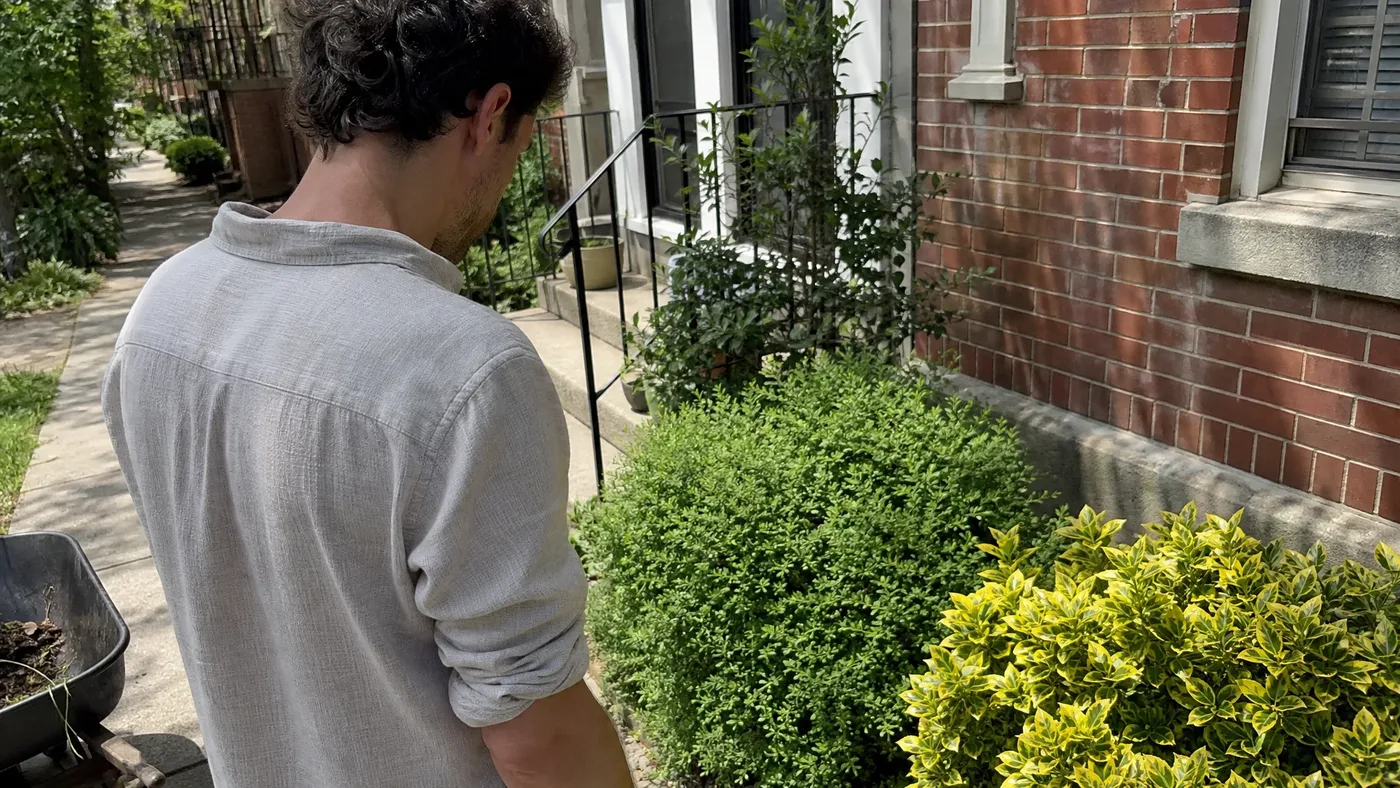
Soft Touch Japanese Holly vs Touch of Gold: Foliage and Growth Habit
You are standing at a garden-center shelf, and the tag on a yellow-tipped Japanese holly reads "Golden Soft Touch." It costs a little more than the plain green Soft Touch next to it. You want to know whether you are paying for a better plant, a different plant, or just a nicer label.
The answer matters because the two plants want different sites. A wrong match shows up as faded color, or as a shrub you dig out and replace in year three.
Read on for how the name got started, where Touch of Gold actually came from, how the foliage and light needs differ, what each plant costs to keep over ten years, and what to ask before you pay.
How Golden Soft Touch Became a Nursery Tag
Golden Soft Touch is shorthand, not a cultivar. The plant it usually points to is Touch of Gold, a separate Japanese holly. The label survives because Soft Touch is the name buyers already know. A seller with a gold-tipped holly to move borrows the familiar name, and every shopper who searches "golden soft touch holly" or "soft touch gold holly" keeps it alive.
That is our read of why it persists, and it has a real cost for you. A tag that says Golden Soft Touch gives you no botanical name to check. You cannot look up size, light needs or hardiness for the plant in your hands. One of the most common questions we get is whether Golden Soft Touch is just a brighter Soft Touch. It is not.
The same thing happens online. Search for "ilex crenata golden soft touch" and you will find listings that treat the phrase as a real cultivar name. It is not one. The cultivar names that exist are 'Soft Touch' and 'Touch of Gold', and any listing that blends them is telling you the seller did not check.
What a Mislabel Costs Later
Common advice says the two are close enough that the name does not matter. On a budget, it matters. Soft Touch stays 2–3 feet tall and wide, and it grows in zones 5a through 9b. We have no verified size or zone range for Touch of Gold, so check with your local extension service before you plant it.
A mix-up at the shelf means putting a shrub in a spot that suits the other one. The fix is digging it out and buying twice, and that is the expense we want you to avoid.
Where Touch of Gold Actually Came From
Touch of Gold is a patented sport. A sport begins as a branch on a Japanese holly that grows differently from the rest of the plant, and growers then propagate that branch into a named cultivar. In this case the difference is the gold-tipped spring growth. Because it is patented, it is sold under its own name, Ilex crenata 'Touch of Gold', and that name should appear on the tag.
We do not give a breeder, introduction year or parent plant here. None of our verified sources states one, and a guessed date helps nobody. If a seller claims a specific origin, ask where it is written down.
What a Sport Means for the Plant
The changed trait is color, and color in a gold-tipped holly is tied to light. That is why Touch of Gold behaves differently on a site even when its shape looks familiar next to Soft Touch. The two are separate cultivars with separate needs, and you should plan around the one you are buying.
A patent also tells you something practical. The plant is meant to be propagated by the license holder, so a plant sold under the Touch of Gold name should trace back to a known source. A plant that cannot name its cultivar has no such trail.
How to Confirm the Name
Read the pot tag for the full botanical name with the cultivar in quotes. Soft Touch reads Ilex crenata 'Soft Touch'. The gold one reads Ilex crenata 'Touch of Gold'. If the tag says only "Japanese holly" or "Golden Soft Touch," ask the seller to check the grower's label or the invoice. A seller who cannot tell you which cultivar is on the bench is a seller to question on everything else.
Soft Touch Japanese Holly Foliage Across the Seasons
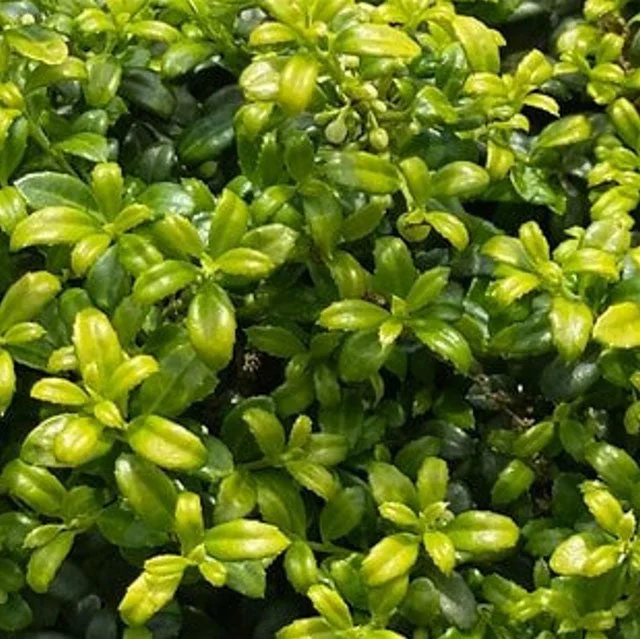
Soft Touch is solid green all year. The leaves are soft-textured and glossy green with a silver mid-vein, and they lack the sharp spines typical of Japanese holly. The shrub is a dense, mounded evergreen. What you see in July is what you see in January, which is the whole point of buying it for a foundation or a low hedge.
The leaves are also small. Virginia Tech gives the species leaf as 1/2 to 3/4 inch long, shiny dark green above and duller below. Small leaves on a dense mound give Soft Touch the fine, even texture people want from a boxwood substitute.
Solid Green, No Seasonal Show
Soft Touch does not offer a berry display to break up the green. The berries are black, about 1/4 inch long, form only on pollinated female plants, and hide below the foliage. The spring flowers are small and not showy. If you want dependable structure and no maintenance of color, that is a feature. If you want something to look at, it is a limit.
Gold Tips on Touch of Gold
Touch of Gold adds gold-tipped growth in spring, set against the older green behind it. That is the one season where the two plants look clearly different. Side by side in April, the gold one reads as a brighter plant, and by midsummer the difference depends mostly on how much light each shrub gets, which the next section covers.
Yellow That Is Not Gold
Diagnose before you blame the cultivar. Yellowing on a plain Soft Touch usually is not a color trait at all. Alkaline soils will cause the leaves to yellow on Japanese holly. If the whole plant turns pale rather than just the new tips, test your soil pH before you decide you bought the wrong holly. Gold tips on new growth are a design. Pale leaves all over are a symptom.
The pattern tells you which it is. Gold that sits only on the newest growth and sits against dark green behind it is the cultivar doing its job. Yellow that spreads across old and new leaves alike points to soil, water or roots. Our soil guide covers how to correct the pH.
Sun Needs and Shade Trade-Offs for Soft Touch Japanese Holly
Soft Touch wants full sun, meaning 6 or more hours of direct light a day. The species it comes from is more flexible: UConn gives full sun to partial shade, and partial shade means 2–6 hours of direct sun. In our experience Soft Touch holds its dark green in part shade, because its color does not depend on light. Our sun and light guide goes deeper on this.
Touch of Gold is the opposite case. It needs more sun to hold its color, so the shade that Soft Touch shrugs off is what costs you the gold. The table sets out how each plant responds to the light it gets.
| Light | Soft Touch | Touch of Gold |
|---|---|---|
| Full sun, 6+ hours | Dark green, listed site for the cultivar | Best chance of holding gold tips |
| Part shade, 2–6 hours | Stays dark green | Gold fades, so you pay for color you lose |
| Under 2 hours | We would not choose it here either | Not worth buying for this spot |
The Cost of a Wrong Site
We often see gold-tipped hollies tucked against a north wall, with the color gone by midsummer. The plant is not dying. It is simply doing what its site allows. That is a wasted premium, and moving a shrub later is more work than choosing the right spot the first time.
The reverse risk is heat. UConn warns that spider mite can be a problem in hot, dry sites, so a sunny spot against a reflective wall needs watering attention for either plant.
How to Read the Plant
Watch the new growth in spring. Dark green tips on a Touch of Gold mean the site is too dim for the color you paid for. Scorched or bleached leaves on the sunny side of either plant, especially after a dry spell, mean the roots are short on water, not that the plant dislikes the light. Fix the watering before you consider moving it.
What Ten Years of Soft Touch Japanese Holly Costs You
Over a decade, the cost of Soft Touch is mostly its price on day one. It has a moderate growth rate and stays at 2–3 feet, so it needs little more than a light trim to hold its shape. Our pruning guide covers timing. For a sense of scale, the species runs 5–10 feet tall, and Virginia Tech notes that most planted cultivars rarely exceed 3 feet. Soft Touch sits inside that small group, which is what our size guide explains in detail.
The table lays out what we expect to cost you in effort and replacement for each plant. Where we have no verified figure for Touch of Gold, the cell says so.
| Cost over ten years | Soft Touch | Touch of Gold |
|---|---|---|
| Mature size | 2–3 feet tall and wide | Get the tag figure before buying |
| Pruning | Light shaping | Confirm size first |
| Color upkeep | None, solid green | Needs a sunny site every year |
| Replacement risk | Mostly drainage related | Higher if the site is shady |
Planning the Space
Because Soft Touch stops near 3 feet, you can plant it once and leave it. A hedge or foundation row stays in scale for years, and you are not budgeting for hard cutbacks or removal when it outgrows a window. Spacing matters more than pruning here, so set the row at the right distance from the start.
Hardiness belongs in the ten-year plan too. Soft Touch grows in zones 5a through 9b, but zones 8 and 9 may not suit it. If you garden at the warm end, plan for afternoon relief and steady moisture, and ask your local extension service how Japanese hollies perform nearby.
Where Replacement Really Comes From
For either plant, the common killer is wet roots. Clemson notes that root rot diseases are a problem with several Japanese holly cultivars. A holly that dies in year four was usually planted in heavy, poorly drained soil, not misnamed. For Touch of Gold, add a second cause: you replace it because it stopped looking like the plant you paid for.
Settling the Choice Before You Buy Soft Touch Japanese Holly
Our recommendation, and we are candid about it, is Soft Touch for most budget-minded gardeners. It forgives mixed light, needs no color upkeep, and gives you the same plant in year ten that you planted in year one. Choose Touch of Gold only if you can offer at least 6 hours of direct sun and you want the gold tips on purpose. Do not buy it hoping a shady bed will pass for a sunny one.
If your yard has one bright bed and several shaded ones, you can use both. Put the gold in the sun as an accent and the green everywhere else. The two share a rounded habit, so they sit together without looking mismatched, and you only pay the gold premium where it will show.
What to Ask at Purchase
Before you pay, get clear answers to these. Our buying guide covers plant quality in more depth.
- Is the botanical name on the tag Ilex crenata 'Soft Touch' or 'Touch of Gold', written out in full?
- What mature size does the grower state for this exact plant?
- Was it grown in full sun or under shade cloth, since that affects how its color looks on the bench?
- Does the seller know the hardiness range for your zone, or will they point you to your local extension service?
Pay for the Name on the Plant, Not the Shelf
Golden Soft Touch is a nickname for Touch of Gold, and the two plants are not interchangeable. Soft Touch gives you solid dark green, a 2–3 foot mound and tolerance for lighter shade. Touch of Gold gives you gold-tipped spring growth, and it asks for more sun to keep it. Match the plant to the site you actually have, and you will not be replacing it in three years.
So before you pay, ask one thing: what is the full botanical name of this plant?
Soft Touch Japanese Holly
Nursery-grown Soft Touch Japanese Holly in sizes from 1 Gallon Shrub, shipped to your door.
From $80.55
Shop Now →We grow Soft Touch on our own farms in full sun and acidic soil, and our growers raise and pack every plant themselves. If the green holly suits your bed better than the gold one, pick out a plant for your own garden from our shop.