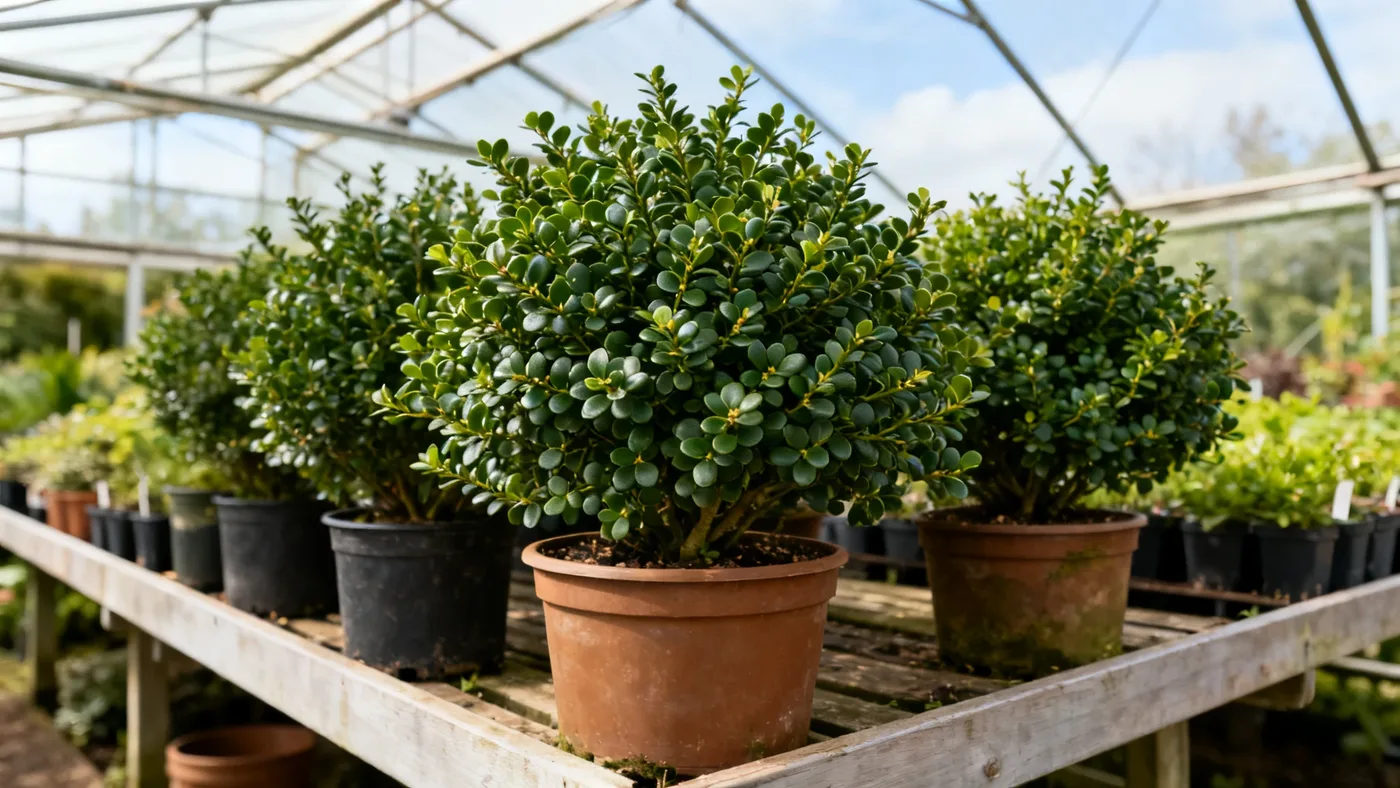
Soft Touch Japanese Holly Buying Guide: What to Look For
Buying quality Soft Touch Japanese Holly (Ilex crenata 'Soft Touch') plants starts before you walk into a nursery or open an online catalog. Knowing what to examine, which container size fits your project, and where to source healthy plants saves time and money. This guide walks you through the decision points so you buy plants that establish quickly and perform well in your landscape.
Understanding Container Sizes and What They Mean
Nursery-grown Soft Touch Japanese Holly plants are typically sold in three standard container sizes: quart, number 1 (often called "#1"), and number 3 ("#3"). Each size carries trade-offs in price, establishment time, and maturity.
A quart container holds roughly 1 liter of soil and the smallest plants available. These young specimens are 6 to 12 inches tall in most cases. Quart plants take 3 to 5 years to reach the mature mounded size of 2 to 3 feet tall and 3 to 4 feet wide. They cost the least upfront but demand consistent care during establishment. Use quart plants for low hedging where you're willing to wait, or for large mass plantings where the per-plant cost matters.
A #1 container (also called a gallon pot) holds roughly 4 liters and produces plants 12 to 18 inches tall. These have been in the nursery longer and developed a stronger root system. They reach mature size in 2 to 3 years. A #1 plant strikes a balance: faster results than quart-size without the premium price of larger stock.
A #3 container (3-gallon pot) holds about 12 liters and grows plants 18 to 24 inches tall with well-branched forms. These reach mature size in roughly 1 to 2 years. Premium pricing reflects the extra growing time at the nursery. Choose #3 plants when you need immediate visual impact or when establishing a foundation bed where you want plants to fill space faster.
Quality Indicators: What Healthy Plants Look Like
Once you know your container size, examine the plant itself. Healthy Soft Touch Japanese Holly shows these characteristics.
Foliage should be dark green and dense across the entire form. The signature fine-textured, rounded leaves are non-spiny unlike other hollies, making the shrub soft to touch. Check the lower interior of the plant. Dense branching from the base is a sign of good structure. Sparse or leggy growth, especially near the soil line, suggests poor light history or age-stress at the nursery.
Run your fingers lightly along stems and leaves. Look for sticky residue, webbing, or small brown bumps on stems and leaf undersides. These signal scale insects, spider mites, or other pests that will stress a young plant during establishment. A few specks are worth questioning; widespread infestation is a red flag to skip that plant.
Inspect new growth at the branch tips. Bright green, firm growth indicates the plant is actively healthy. Wilted, brown, or yellowed new shoots suggest root trouble or nutrient stress.
Lift the pot and check the base. If roots are circling the drainage holes in thick mats or bursting from the sides, the plant is rootbound and may struggle after planting. Roots circling once or twice inside the pot are normal; the goal is a root system that fills the pot without girdling.
Comparing Plants at Different Price Tiers
Budget-friendly options: A quart-size Soft Touch Japanese Holly from a mass-market retailer is the lowest-cost way to start. These plants are healthy but often grown in bulk and may not have the dense branching of premium stock. Budget plants work well for large hedging projects or when you're comfortable with a 3 to 5 year establishment timeline. Plan to stake or guide growth if stems are sparse.
Mid-range plants: A #1 container from a local or specialty nursery balances cost and quality. Plants at this tier are often grown with more attention to branch structure. Foliage is typically fuller, and nurseries often hand-select stock for retail sale. Establishment is noticeably faster than quart-size.
Premium tier: A #3 or larger specimen from a specialty nursery or mail-order source shows careful culture. These plants command higher per-unit cost because they have been grown for 2 or more seasons with pruning or light shearing to create dense, mounded form. Premium plants are ideal for high-visibility foundation plantings or when budget allows. They perform on the faster end of the 1 to 2 year maturation window.
Red Flags: What to Avoid When Buying
Wilting foliage on a moist soil surface signals root rot or disease. Soft Touch Japanese Holly needs consistent moisture but also well-drained soil to prevent black root rot. A wilted plant despite wet soil likely has a rotted root system and will not recover after planting.
Yellow or pale leaves when the plant is otherwise green suggest nutrient deficiency or stress. Soft Touch tolerates a range of soil types but prefers moist, well-drained, humus-rich soil with a pH around 5.0 to 6.5. Chlorosis (yellowing while veins stay green) is common in alkaline soil and can persist even after correcting pH. If you have naturally alkaline soil, buy the healthiest specimen available and plan soil amendment.
Brown or scorched leaf edges, especially on the side facing full sun, indicate winter leaf burn or heat stress. Soft Touch performs best in part shade in hot climates. If the plant was grown in shade and you plan full sun in zone 8, prepare for possible foliage scorch during the first summer.
Leggy or sparse growth with large gaps between branches is a structural defect. Soft Touch naturally grows in a dense mound, so sparse plants indicate nursery neglect or too much shade during propagation. This cannot be corrected by pruning and will take years to fill in.
Wet or foul-smelling soil is a dealbreaker. Poor drainage at the nursery causes root disease. Even if the foliage looks acceptable, the root system is likely damaged and establishment will be poor.
Where to Buy Soft Touch Japanese Holly
Local garden centers and specialty nurseries are the best starting point. Staff can describe how plants were grown, answer questions about your soil and site, and often guarantee stock for 30 days. Local nurseries also allow you to inspect the full range of container sizes and hand-select for foliage density and form.
Regional wholesale nurseries sometimes sell to homeowners if you contact them directly. Their plants are field-grown in your region, meaning they are acclimated to local climate and soil. Availability varies; call ahead before visiting.
Mail-order and online retailers offer convenience and often ship quart or #1 containers. Evaluate their description of foliage density, branching, and any mention of growing practices. Reputable sources describe plant size, maturity estimates, and hardiness truthfully. Be cautious of claims that seem too good: a 3-foot-tall specimen in a quart pot is unrealistic, and guaranteed overnight establishment is not possible.
Big-box retailers carry Soft Touch Japanese Holly seasonally, usually in spring and fall. Prices are often low, but plants may be stressed from transport and shelf time. Inspect carefully for pest damage and root-bound conditions before buying. If plants have been sitting in full sun without consistent water, foliage may show damage that does not recover quickly.
Sizing Your Purchase for Your Landscape
Before buying, know your spacing. Soft Touch Japanese Holly should be planted 2.5 to 3 feet apart for hedging or mass plantings. A 10-foot hedge with 30-inch spacing needs roughly 4 plants. A 20-foot run needs 8 plants. Underestimate the count and your hedge fills slowly; overestimate and you waste money or create crowding.
If you're creating a foundation bed, measure the area and note sun exposure. Full sun areas get Soft Touch easily in zones 5 to 7; in zone 8, part shade is safer. Sketch the planting with 2.5-foot spacing to see how many plants fit. Factor in future width of 3 to 4 feet per mature plant.
Consider container planting as an alternative or supplement. Soft Touch Japanese Holly works well in containers given adequate drainage and winter protection in colder zones. A specimen in a large pot (14 inches or wider) can stay in a quart or #1 until planting season or even become a permanent patio feature.
Hardiness and Climate Fit
Soft Touch Japanese Holly is hardy in USDA zones 5 to 8. Zones 5 to 7 are reliable; zone 8 performance varies based on summer heat and humidity. If you live in zone 8, choose a plant from a source that grows in your region or a warmer climate. Local-grown plants have proven viability in your heat and humidity. Mail-order plants from cooler zones may not thrive.
Site matters as much as zone. A plant in a sheltered, part-shaded location tolerates cold better than one in full winter exposure. If your site is windy or receives afternoon sun in zone 7 or 8, shade cloth during the first summer helps reduce stress.
Timing Your Purchase
Spring and fall are ideal planting seasons, and nurseries stock Soft Touch heavily during these windows. Buy in spring (late March through May) for summer establishment. Spring-planted shrubs have months to develop roots before winter. Buy in fall (September through early November) for cooler-season growth. Fall planting works especially well in zones 7 and 8 where spring heat arrives quickly.
Summer purchases are risky. Heat stress during the first summer is real, and consistent watering is critical. If you must buy in summer, choose a quart-size or smaller so you can keep it in a shaded nursery area until fall planting becomes possible.
Avoid buying in late autumn (after November) in cold climates. Plants arriving as soil freezes cannot establish roots over winter and may not survive spring.
Questions to Ask Before Buying
Ask the nursery or seller these questions to make a confident choice.
- How long has this plant been in the container? (Longer establishment signals a fuller form.)
- Was this plant grown in shade or full sun? (This affects foliage density and sun tolerance in your yard.)
- What is the mature height and width? (Confirm it matches 2 to 3 feet tall and 3 to 4 feet wide for the species.)
- What fertilizer was used? (Acid-forming fertilizer is ideal for Soft Touch.)
- Does this plant have any pests or diseases? (Honest answer matters more than "none ever".)
- Can I return it if it doesn't thrive? (30-day guarantees are standard.)
Next Steps After You Buy
Once you bring your plants home, keep soil consistently moist but not waterlogged. Store them in dappled shade if planting is delayed more than a few days. Read the care guide on planting, spacing, and watering to set yourself up for success. A newly planted Soft Touch needs 1 to 2 years of consistent moisture during dry spells, especially during the first summer.
For detailed care, see our guide to Soft Touch Japanese Holly care and planting for a strong start. These guides cover soil prep, establishment watering, and pruning so your plants reach full size quickly.
Quick Reference: Buying Checklist
| What to Assess | What to Look For | Red Flag |
|---|---|---|
| Foliage | Dark green, dense, fine texture across entire form | Pale, sparse, or leggy growth; thin interior branching |
| Pests | No visible insects, webbing, or residue | Sticky coating, spider mite webbing, scale bumps on stems |
| Leaves | Firm, bright green; new growth active | Wilting, yellowing, brown edges, scorched tips |
| Roots | Root system fills pot once or twice; no girdling | Thick root mat at drainage holes; circling roots; rootbound |
| Soil | Moist but well-draining; no foul odor | Soggy, waterlogged, or foul-smelling soil |
| Container Size | Quart (fast growers with time), #1 (balanced), #3 (instant impact) | Undersized pot for age; plant already rootbound |
| Form | Dense, mounded, well-branched from base | Sparse base, tall and thin, uneven branching |