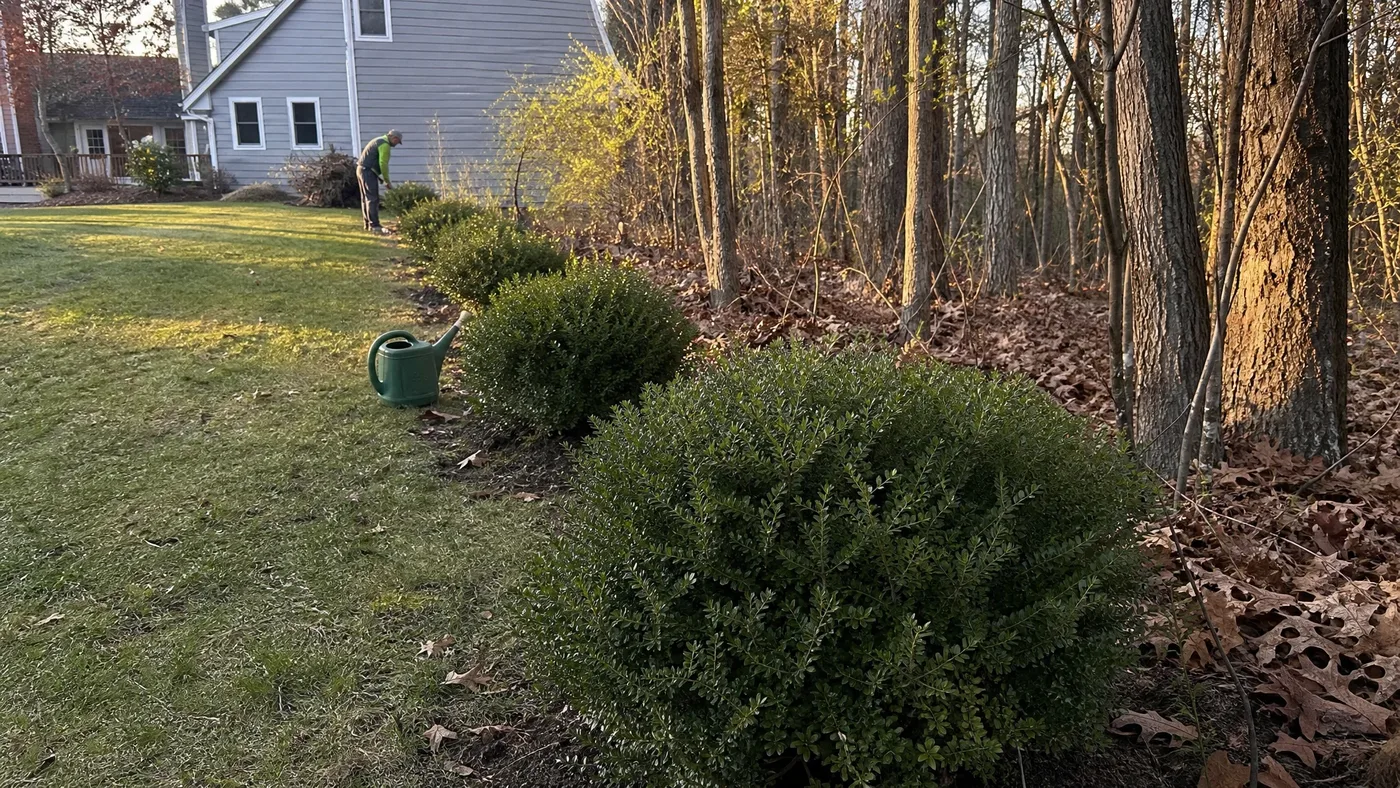
Is Soft Touch Japanese Holly Invasive in the US?
A neighbor leans over the fence, eyes the new row of Soft Touch Japanese Holly, and says that anything from Japan will eventually take over the yard. The planter stops digging for a moment. Then they go inside and search the question, which is probably how you got here.
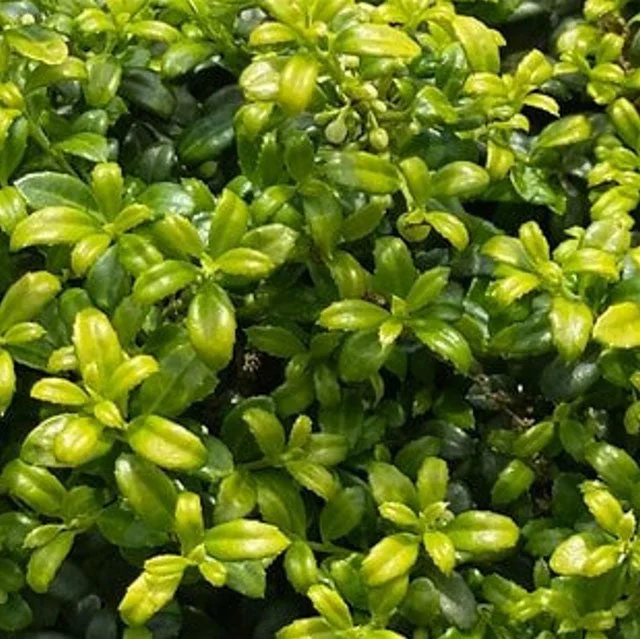
No, Soft Touch does not behave that way. It stays 2–3 feet tall and wide, grows at a moderate pace, and sets little fruit. The full picture has a few wrinkles, though, including what its parent species has done in parts of the eastern US, and a plant that stays put in one yard still deserves a look at the rules in your state.
In this article, we'll go through the privet comparison, what invasive-species listings and field reports show, the gap between non-native and invasive, and what to do about berries and seedlings.
The Belief That Soft Touch Japanese Holly Spreads Like Privet
Privet earns its reputation. It seeds into fence lines and woodland edges, throws up thickets, and crowds out whatever grew there first. Soft Touch is also an evergreen hedge shrub, so plenty of people file the two in the same drawer. We understand the logic, but the behavior is not the same.
Start with size. Soft Touch is a dense, mounded, evergreen shrub with a moderate growth rate, and it stays 2–3 feet tall and 2–3 feet wide. A shrub that tops out around knee height cannot overtop anything in a woodland understory. Our guide on how big Soft Touch really gets has the full numbers.
Set the cultivar beside its parent and the gap is clear. The figures below for the straight species come from NC State's species page:
| Trait | Soft Touch | Straight species (Ilex crenata) |
|---|---|---|
| Mature height | 2–3 feet | 5–10 feet |
| Mature width | 2–3 feet | 5–8 feet |
| Hardiness zones | 5a–9b | 5a–8b |
The bad press about Japanese holly in the wild traces back to the species, a shrub that can reach 5–10 feet, not to a mound selected for its tidy habit. One of the most common questions we get is whether a row of Soft Touch will creep outward over the years. It won't. Each plant thickens in place, and neighbors knit together at the edges.
That knitting is the only "spreading" you will see. If you set plants close for a low hedge, expect them to merge into one line, and plan your spacing around that rather than around any wandering habit.
Does Soft Touch Japanese Holly Escape Into Wild Woods?
No, and the reasoning has two parts. The straight species, Ilex crenata, has naturalized in parts of the eastern US, which is why it comes up in invasive plant discussions. Soft Touch is a cultivar, a selection multiplied from cuttings, and the escape reports describe the species rather than this compact plant. We say that with care, because a lack of reports is not proof, and that is why a local check matters.
What the Listings and Field Reports Say
Invasive-species lists are usually written at the species level, and each state keeps its own. Some flag a plant, others only watch it, and many say nothing at all. Because the rules differ by state, we cannot hand you one answer for the whole country.
Field reports come from botanists, extension agents and land managers who see plants outside gardens. An escaped shrub shows up as seedlings in woods, along roadsides and under trees where birds perch. That pattern needs berries, a pollen source and a way to move seed, and a lone compact cultivar supplies very little of that.
Check Your State in Four Steps
Work through these in order and stop as soon as you get a clear answer:
- Search your state's invasive plant council or natural resources department for Ilex crenata.
- If the species appears, read whether the entry mentions cultivars and what the rating actually restricts, such as sale or only monitoring.
- Call your county extension office and ask whether Japanese holly cultivars are a concern locally. They hear about escapes early.
- Walk any wooded edge near your property and look for holly seedlings under mature plants.
Step four is the one people skip, and it is the most honest. A listing tells you what experts worry about across a region. A seedling in the leaf litter tells you what is happening on your own ground.
Why Japanese Origin Does Not Equal Invasive
Your neighbor's remark mixes up two separate ideas. Non-native means a plant came from somewhere else. Invasive means it spreads on its own into wild or farmed land and does harm there. Plenty of non-native plants stay exactly where you put them, and some native ones can be pushy.
Ilex crenata is native to Japan and Korea, so it has no native range in the US at all. Soft Touch is a selection of that species, which answers the other question people type into search boxes. No, Soft Touch is not a native holly. It is a non-native shrub that has been bred into a very small, very tidy package.
Climate plays a part too. Soft Touch grows in zones 5a through 9b, though zones 8 and 9 may not suit it. Our guide to which zones Soft Touch grows in explains where it is happiest. A plant stretched toward the edge of its range tends to struggle long before it spreads, so the places where it could behave badly are mostly the places where it will not thrive.
If you want a native holly for your yard, ask your extension service which hollies are native to your region. That is a reasonable preference, and it does not turn a well-behaved Japanese holly into a villain. It just means you are choosing on purpose.
So the useful label for Soft Touch is non-native and well mannered. That is a fine place for a hedge plant to sit, as long as you stay alert, which the next two sections cover.
Fruit, Seedlings, and Soft Touch Japanese Holly
Seedlings are how a garden plant turns into a wild one, so this is the question that really decides the matter. Follow it from flower to ground.
Berries and Who Pollinates Them
The species flowers are dull, greenish-white and fragrant, opening in spring. Soft Touch blooms in spring as well, and you will barely notice it. Japanese hollies typically have small, black fruit. On the species the berries are glossy and about ¼ inch across, and they hide among dark leaves. Soft Touch is a light fruiter, and we rarely see more than a scattering on our plants.
Fruit also needs two sexes. Ilex crenata is dioecious, with separate male and female plants, so a female sets berries only when pollen arrives from a male nearby. Cuttings produce copies of one parent, which means a hedge made only of Soft Touch is all one sex. Clemson notes that 'Roundleaf' is a male selection that does not produce berries, which shows that male Japanese hollies exist and that berrying depends on who is planted nearby.
That leaves one route to seed: a Japanese holly of the opposite sex close enough for bees. Even then, the seeds need a bird or a rake to carry them anywhere. If children play near your hedge, our guide on whether Soft Touch is toxic to pets or kids covers the berries from that angle.
If Seedlings Do Show Up
Look under and beside your plants each spring. A holly seedling is a small plant with tiny, dark, glossy leaves, and it pulls easily when the soil is damp. Get the whole root. Finding one or two is not a crisis. Finding many tells you a pollinating holly is working somewhere nearby, and that is worth mentioning to your extension office.
Maintenance Rumors Around Soft Touch Japanese Holly
The rumor says a non-native shrub needs constant policing: shear it weekly, dig out suckers, strip the berries before birds find them. None of that applies here. A 2–3 foot mound needs a light trim once a year at most to hold its outline, and our guide on how and when to prune Soft Touch covers the timing. In our rows, the only thing we police is weeds.
What Actually Needs Your Attention
The real upkeep is keeping the plant healthy, and trouble shows up in the leaves first. These are the points worth a look each season:
- Yellow leaves often point to soil that is too alkaline, since alkaline soils cause the leaves to yellow on the species, and our guide to the best soil for Soft Touch explains how to correct it.
- Insects to watch for are holly leaf miner, spider mites, whitefly and scale. Spider mites are worst in hot, dry spots, so check the undersides of leaves in midsummer.
- Diseases to watch for are leaf spot, leaf rot, tar spot and powdery mildew. Clemson also warns that root rot is a problem with several Japanese holly cultivars, so avoid soggy ground.
- Deer rate only mildly resistant, so a hungry herd may still sample the new growth.
Why a Healthy Plant Is a Contained Plant
A stressed shrub gets replaced, and the replacement is where garden plants begin to cause trouble, because gaps invite whatever happens to seed in. A hedge that fills its bed on schedule leaves no gaps. That is a good reason to treat watering and soil as your real maintenance rather than anything related to spread.
Planting Soft Touch Japanese Holly With a Clear Conscience
The verdict is simple. Soft Touch is non-native, slow to fill, low-fruiting and small, and the escape reports we know of concern the straight species. You can plant it without guilt, provided you add a few habits that suit any non-native plant.
Habits That Keep Any Non-Native Plant Responsible
Start with the lists. Look up your state's invasive plant list before you buy, and look again if you move. Rules change as new field reports come in, and a quick search beats finding out from a neighbor.
Next, think about where your clippings go. Prunings and any berries are better bagged for the trash or green waste service than tossed over the back fence or onto a compost heap that never gets hot. Plants that live in a heap and then get spread as "finished compost" are one of the quieter ways a shrub ends up in the wrong place.
Finally, site it sensibly. Keep Soft Touch in beds, foundations and borders, not along the edge of a wooded lot where birds could carry fruit into the trees. Our guide to landscape ideas for Soft Touch shows layouts that keep it in the garden where it belongs.
One more habit costs nothing. Glance at the plants once or twice a year, pull any stray seedling, and note whether berries are forming. A shrub that gets a look every season rarely surprises anyone.
Soft Touch Japanese Holly Earns a Place in Your Yard
Soft Touch is a Japanese-origin shrub, but non-native does not mean invasive. It stays 2–3 feet tall and wide, grows at a moderate pace, fruits lightly, and needs a second sex nearby to set seed at all. The escape reports describe the straight species, which grows much larger. A neighbor's offhand remark is not a reason to skip a good hedge plant.
Your own routine is short: check local lists, skip the compost pile, watch for strays.
Soft Touch Japanese Holly
Nursery-grown Soft Touch Japanese Holly in sizes from 1 Gallon Shrub, shipped to your door.
From $80.55
Shop Now →Soft Touch spends its whole life on our farms in open sun and acidic ground, which is where it stays compact and tidy. We only ship plants we would plant ourselves, top-quality shrubs that behave the way this guide describes. Once you have settled the invasive question for your own yard, we would love for you to see the Soft Touch we have ready.